Skip to content
PlantNurseryHQ

All city plant guides

Fort Worth, TX · Plant guide

Plants for Fort Worth.

Fort Worth buyers can combine a flowering crape myrtle or evergreen yaupon holly with lower red yucca, mealycup sage and tickseed. Coral honeysuckle adds height on a fence or arbor, but it should not share the red yucca’s dry watering schedule.

Updated 2026-09-06 · Sources & photo credits

Separate thirsty and dry beds

Keep red yucca in a well-drained, drier spot. Give coral honeysuckle moderately moist soil and a support to climb; the same watering routine need not suit both.

Provide support for coral honeysuckle

Plant coral honeysuckle beside a trellis, arbor, or fence. Expect fewer flowers in shade and prune after flowering when shaping is needed.

Common crape myrtle

Lagerstroemia indica

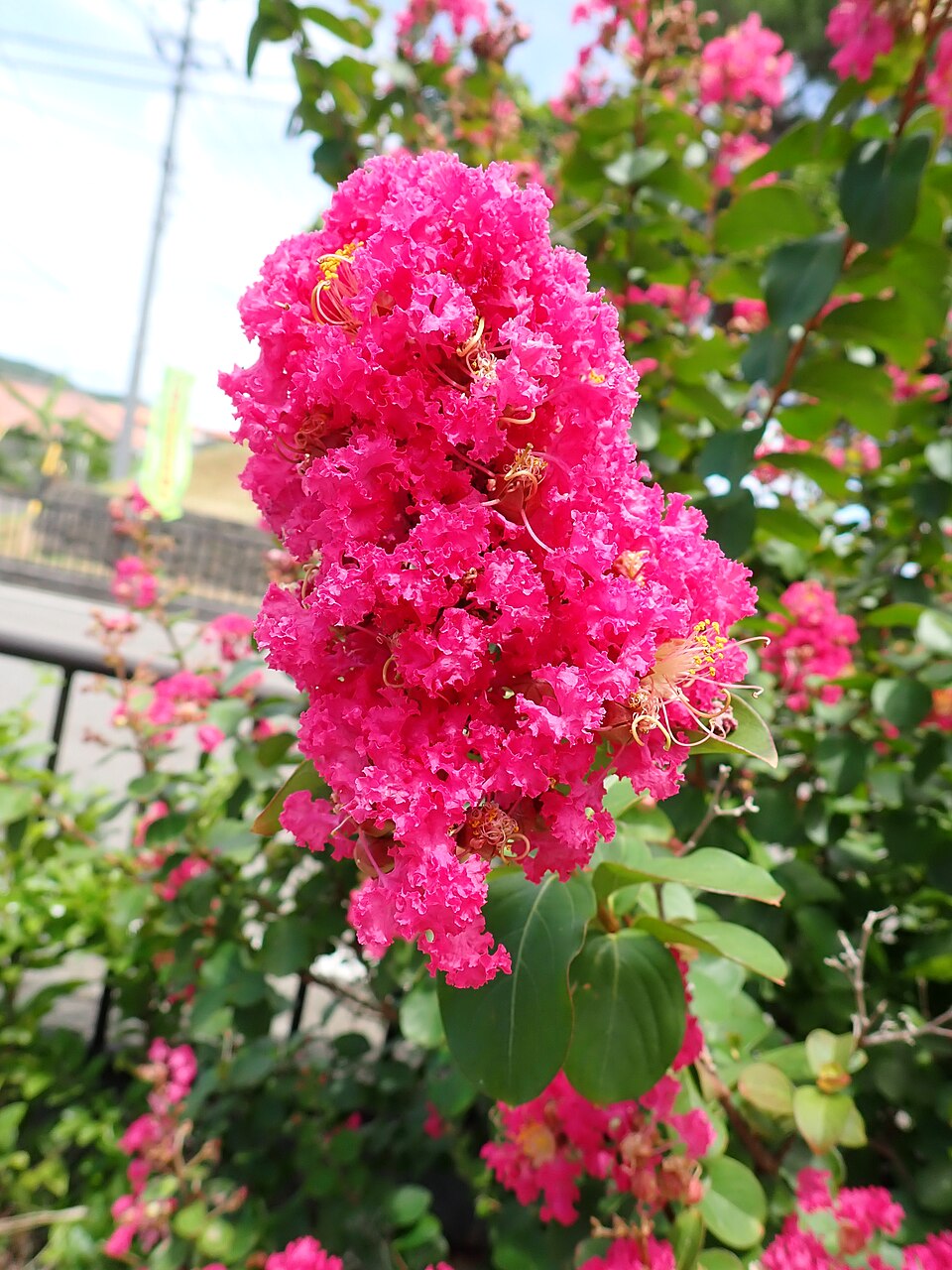
Crape myrtle flowers above green leaves.
Crape myrtle flowers above green leaves. Photo credit

Summer flowers and peeling bark make crape myrtle useful beyond a single season. Choose the variety for its full-grown size and disease resistance, then give it room instead of relying on repeated heavy pruning.

Sun

Full sun.

Soil & water

Moist, well-drained; tolerates occasional wet or dry soil after establishment.

Full-grown size

6-30 ft tall and wide, variety dependent.

Through the year

Showy flowers July-September; fall color and exfoliating bark.

Winter hardiness

USDA 6a-9b; protect from winter winds; select exact mature-size cultivar.

Plant references

Yaupon holly

Ilex vomitoria

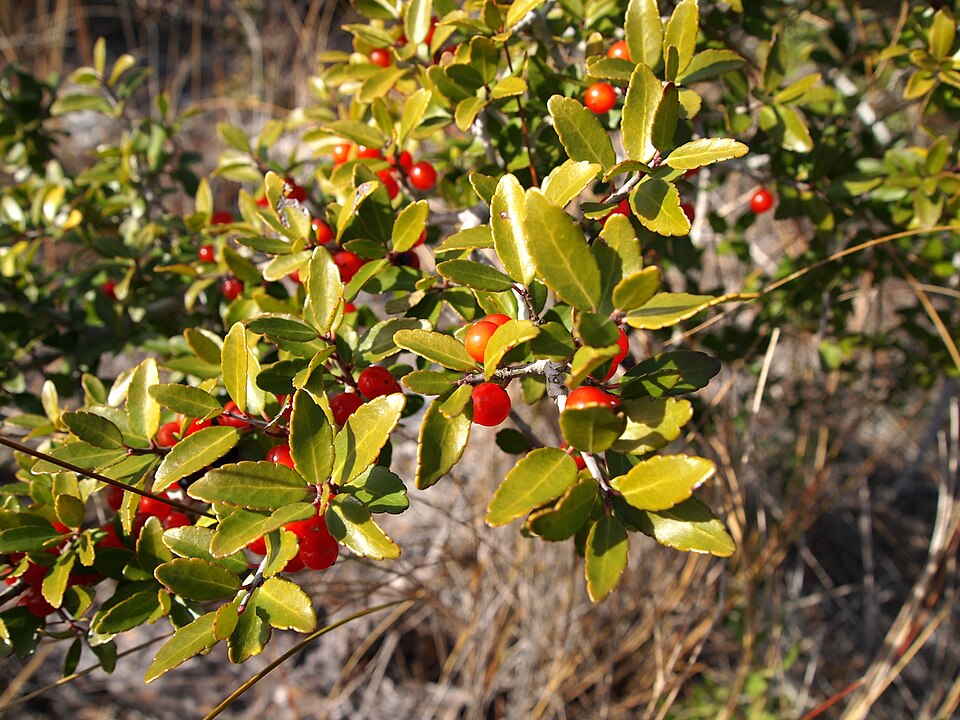
Yaupon holly with red berries among its small evergreen leaves.
Yaupon holly with red berries among its small evergreen leaves. Photo credit

Yaupon holly can become a small evergreen tree, so check the variety before using it as a low hedge. If berries are the attraction, ask for a female plant and a suitable nearby pollinator.

Sun

Full sun to deep shade; more sun for dense canopy/fruit.

Soil & water

Good drainage; moist to occasionally dry or wet; occasional flooding tolerated.

Full-grown size

10-20.5 ft tall × 8-12 ft wide.

Through the year

Evergreen; small spring flowers; female fruit red/orange in fall-winter.

Winter hardiness

USDA 7a-9b; dioecious, fruit requires female plus pollinator; berries not for eating.

Plant references

Red yucca

Hesperaloe parviflora

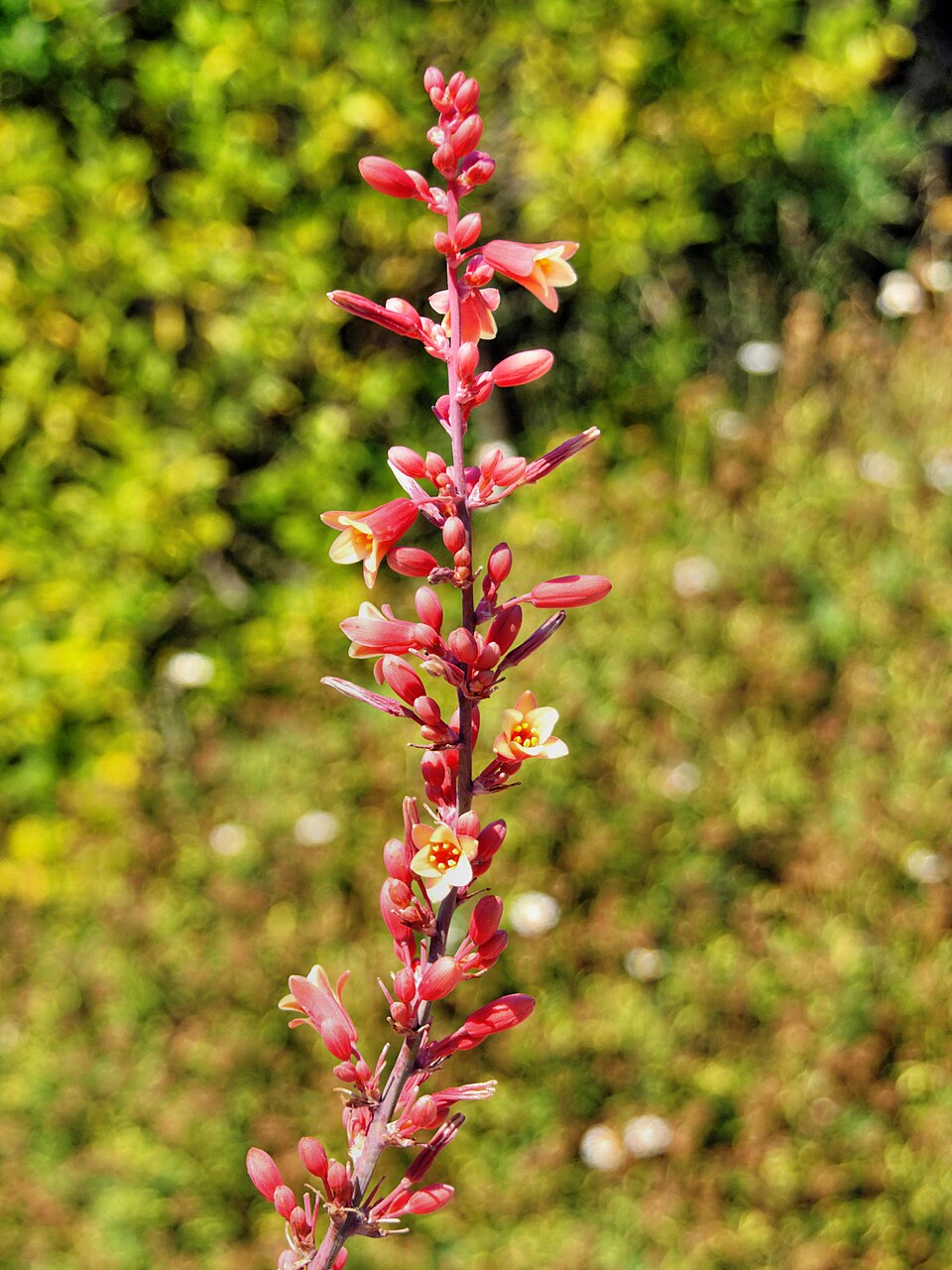
Red yucca’s coral-pink flowers along a tall stalk.
Red yucca’s coral-pink flowers along a tall stalk. Photo credit

Red yucca is useful where you want tall flower stalks without a large shrub. The arching leaves still need room at ground level, so set the clump back from a narrow path.

Sun

Full sun to partial shade.

Soil & water

Well-drained loam/sand/rocky soil; occasionally dry to very dry.

Full-grown size

3-5 ft tall × 4-6 ft wide; flower stalks 4-6 ft.

Through the year

Red/pink/coral flowers spring-summer.

Winter hardiness

USDA 6a-10b; allow clearance for arching leaves and tall stalks.

Plant references

Mealycup sage

Salvia farinacea

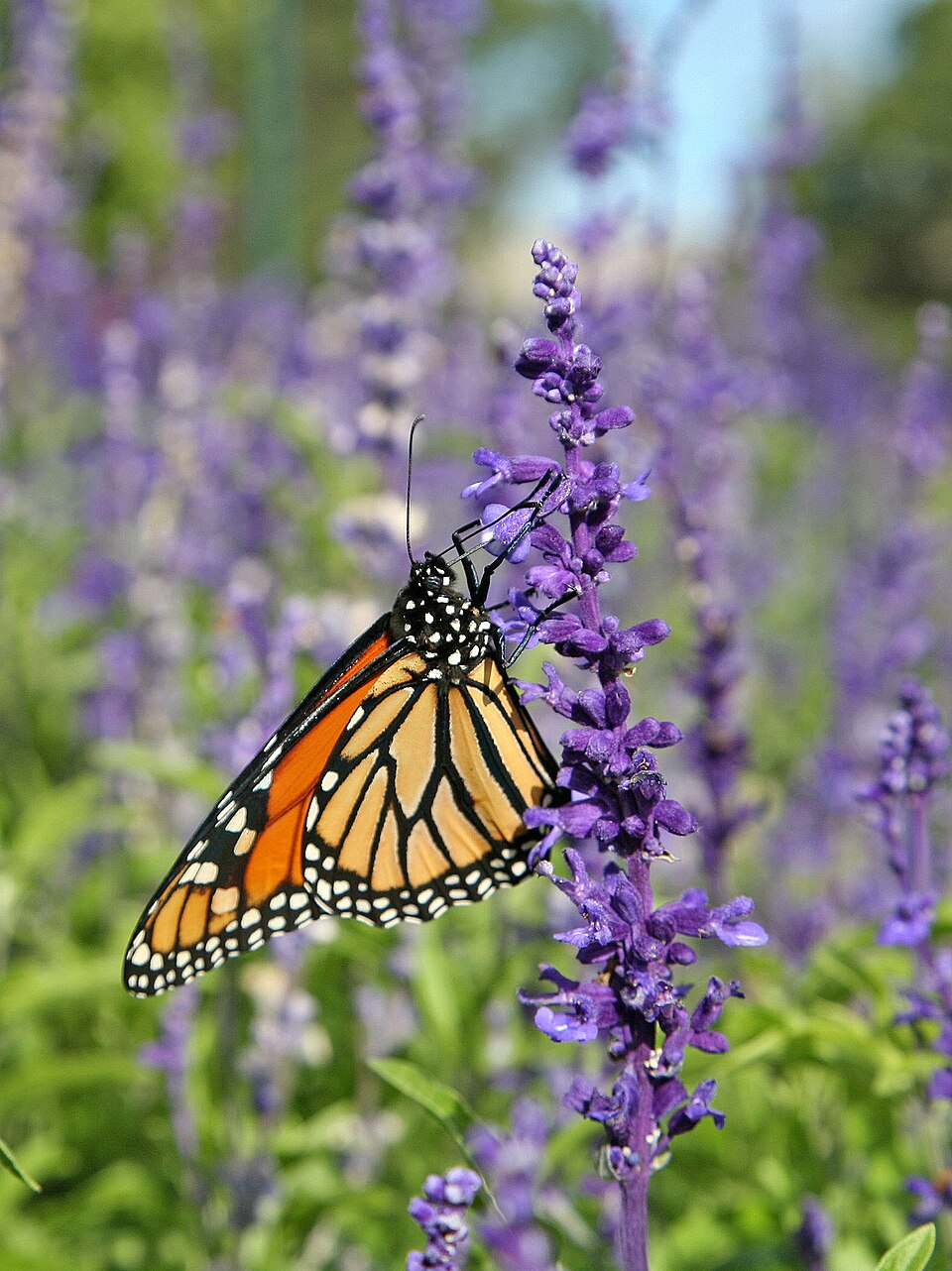
A butterfly visiting mealycup sage’s blue-purple flowers.
A butterfly visiting mealycup sage’s blue-purple flowers. Photo credit

Mealycup sage sends blue, purple or white flower spikes above a compact clump. Give it sun, good drainage and room for air to move. Treat it as an annual where winter cold kills it.

Sun

Full sun.

Soil & water

Moist, well-drained; tolerates occasional dry clay.

Full-grown size

1.5-3 ft tall × 1-2 ft wide.

Through the year

Blue/purple/white flowers April-October.

Winter hardiness

USDA 8a-10b; use as annual where winter kills it; air circulation reduces mildew.

Plant references

Large-flower tickseed

Coreopsis grandiflora

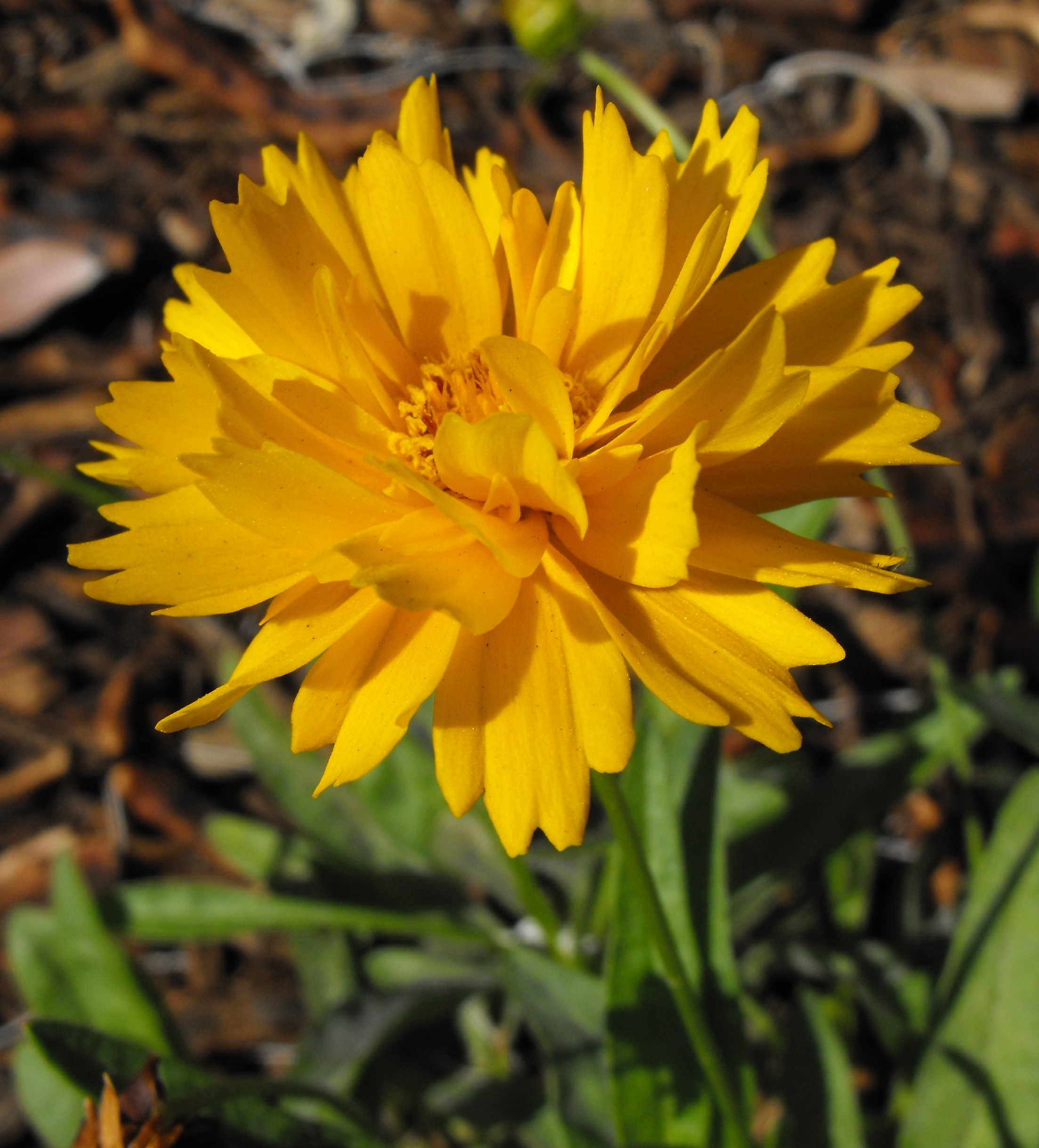
Large-flowered tickseed; this garden form has extra rows of yellow petals.
Large-flowered tickseed; this garden form has extra rows of yellow petals. Photo credit

Largeflower tickseed brings yellow flowers to a sunny, well-drained bed. Removing faded flowers can extend the display. It may be short-lived, though seedlings can help it persist.

Sun

Full sun; partial shade tolerated.

Soil & water

Dry side of well-drained sandy/rocky soil; clay only with drainage.

Full-grown size

1-3 ft tall and wide.

Through the year

Yellow flowers late spring-late summer.

Winter hardiness

USDA 4a-9b; may be short-lived but can reseed; deadhead for longer bloom.

Plant references

Coral honeysuckle

Lonicera sempervirens

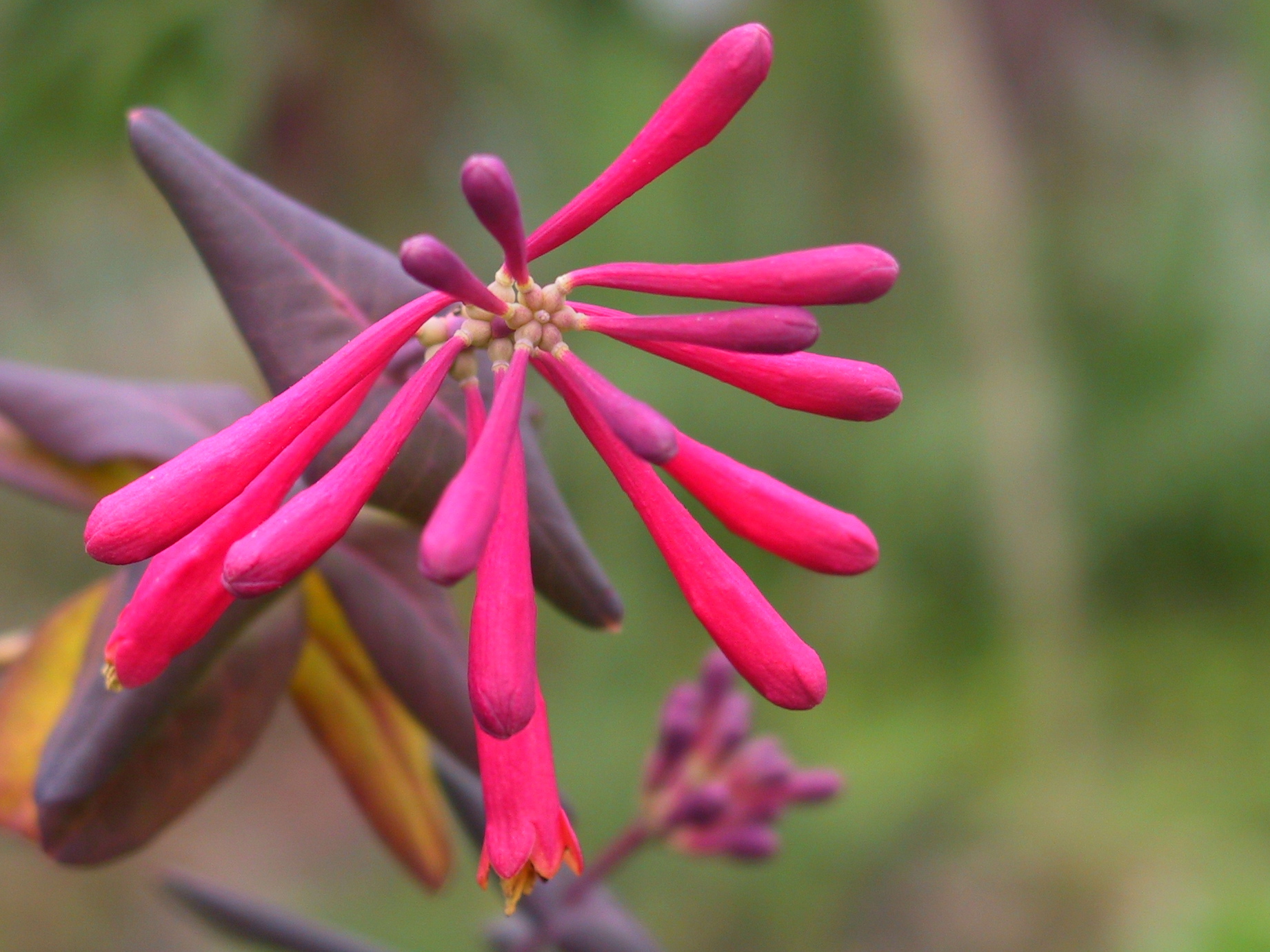
Coral honeysuckle’s tubular flowers and green leaves.
Coral honeysuckle’s tubular flowers and green leaves. Photo credit

Coral honeysuckle needs something to climb: a trellis, arbor or fence. Give it sun for more flowers and shape it after bloom. Keep its flammability in mind when choosing a position near buildings.

Sun

Full sun; some shade with fewer flowers.

Soil & water

Medium-moist, humus-rich, well-drained neutral-acid soil.

Full-grown size

10-20 ft tall × 3-6 ft wide.

Through the year

Coral tubular flowers summer; berries later; evergreen only in warm winters.

Winter hardiness

USDA 4a-9b; evergreen only in warm-winter climates; needs trellis, arbor or fence; high flammability, keep outside home defensible space.

Plant references

Before you go to the nursery

Browse nurseries in Fort Worth to find places to contact. Ask about the exact plants and varieties on your list before making a trip.

Bring a photo of the planting spot and its measurements. Note when it gets direct sun, how quickly the soil drains after watering, and whether you can water through a dry spell. Ask about the full-grown size of the exact variety on the label.

We have not confirmed local nursery listings for these plants yet. Use the botanical names above when you ask; common names can refer to more than one plant.

Sources & photo credits

Our selections draw on regional gardening references and species profiles. These are species guides; named varieties can have different sizes and needs. Photographs show the species, not nursery stock.

Local growing advice

Hesperaloe parviflora plant profile · NC State Extension Plant Toolbox · checked 2026-09-05

Lonicera sempervirens plant profile · NC State Extension Plant Toolbox · checked 2026-09-05

Earth-Kind Plant Selection · Texas A&M AgriLife Extension · checked 2026-09-05

Common crape myrtle

Lagerstroemia indica plant profile · checked 2026-09-05

Botanical identity: Lagerstroemia indica

Yaupon holly

Ilex vomitoria plant profile · checked 2026-09-05

Botanical identity: Ilex vomitoria

Red yucca

Hesperaloe parviflora plant profile · checked 2026-09-05

Botanical identity: Hesperaloe parviflora

Mealycup sage

Salvia farinacea plant profile · checked 2026-09-05

Botanical identity: Salvia farinacea

Large-flower tickseed

Coreopsis grandiflora plant profile · checked 2026-09-05

Botanical identity: Coreopsis grandiflora

Coral honeysuckle

Lonicera sempervirens plant profile · checked 2026-09-05

Botanical identity: Lonicera sempervirens

Winter hardiness and local weather

A USDA hardiness zone describes winter cold. It does not measure summer heat, drainage or water needs. Check your own ZIP and the label on the variety you buy.

City reference: ZIP 76106, zone 8b. A ZIP whose postal primary-city label matches this city, selected from the retained geography snapshot. It is a city reference, not your address; postal labels do not define municipal boundaries.

Median last spring frost: Mar 5; median first autumn frost: Nov 24. Station: FT WORTH MEACHAM FLD NAAF, TX US (2.07 km from the reference ZIP). These are historical averages, not a forecast.

USDA hardiness maps · NOAA climate normals
Photography

Lagerstroemia indica (red) in Ishigaki, Okinawa.jpg by M108t · CC BY 4.0. Replaced prior unsuitable image; resized Commons thumbnail to max 960px width; no crop or color change.

Ilex vomitoria.jpg by Luteus · CC BY 3.0. Replaced unsuitable image; resized Commons thumbnail to max 960px width; no crop or color change.

Hesperaloe-parviflora-flowers.jpeg by Groogle · CC BY-SA 3.0. Wikimedia Commons thumbnail, resized from the source photograph. No additional crop or color changes.

00 3080 Mehliger Salbei (Salvia farinacea).jpg by W. Bulach · CC BY-SA 4.0. Resized Commons thumbnail to max 960px width; no crop or color change.

Coreopsisgrandiflora.jpg by Stickpen · Public domain (PD-self). None; original file retained.

Lonicera sempervirens.jpg by Juni from Kyoto, Japan · CC BY 2.0. None; original file retained.