Skip to content
PlantNurseryHQ

All city plant guides

Portland, OR · Plant guide

Plants for Portland.

Portland gardens can build a layered edge from vine maple and serviceberry, with evergreen huckleberry and tall Oregon grape below. Oceanspray needs patience and room to establish its loose form; western sword fern is the ground-layer choice for shade and organic soil.

Updated 2026-09-06 · Sources & photo credits

Match canopy moisture

Use sword fern, Oregon grape and vine maple where shade and soil moisture fit; sunnier vine maple may require extra irrigation.

Allow natural forms

Serviceberry can sucker, oceanspray establishes slowly, and shaded vine maple spreads broadly; give these forms room instead of forcing narrow outlines.

Vine maple

Acer circinatum

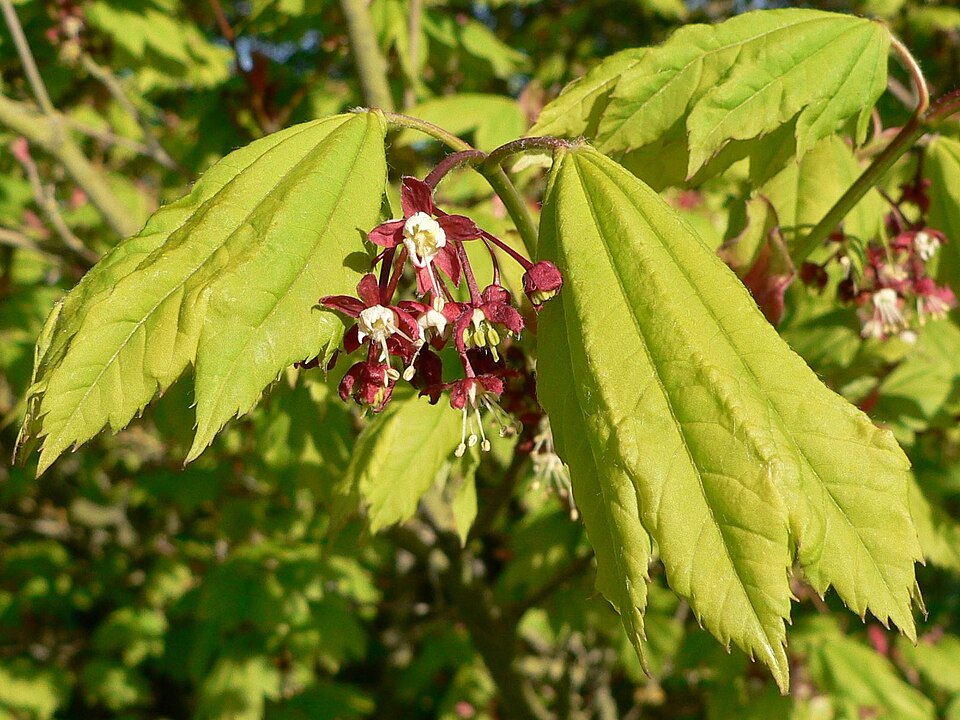
Vine maple leaves and small spring flowers.
Vine maple leaves and small spring flowers. Photo credit

Vine maple suits a spot where its branching shape can be seen. Allow for a large shrub or small tree, and match its moisture needs to the planting site.

Sun

Sun to deep shade; prefers moist shade and also tolerates sun.

Soil & water

Moisture-retentive soil; plants in sun may need extra irrigation.

Full-grown size

10-30 ft tall, with the larger sizes reported in western Oregon landscapes.

Through the year

Deciduous; foliage can turn red, orange and yellow in fall, especially with sun.

Winter hardiness

Hardy to USDA zone 5, with some reports extending into zone 4.

Plant references

Tall Oregon grape

Mahonia aquifolium

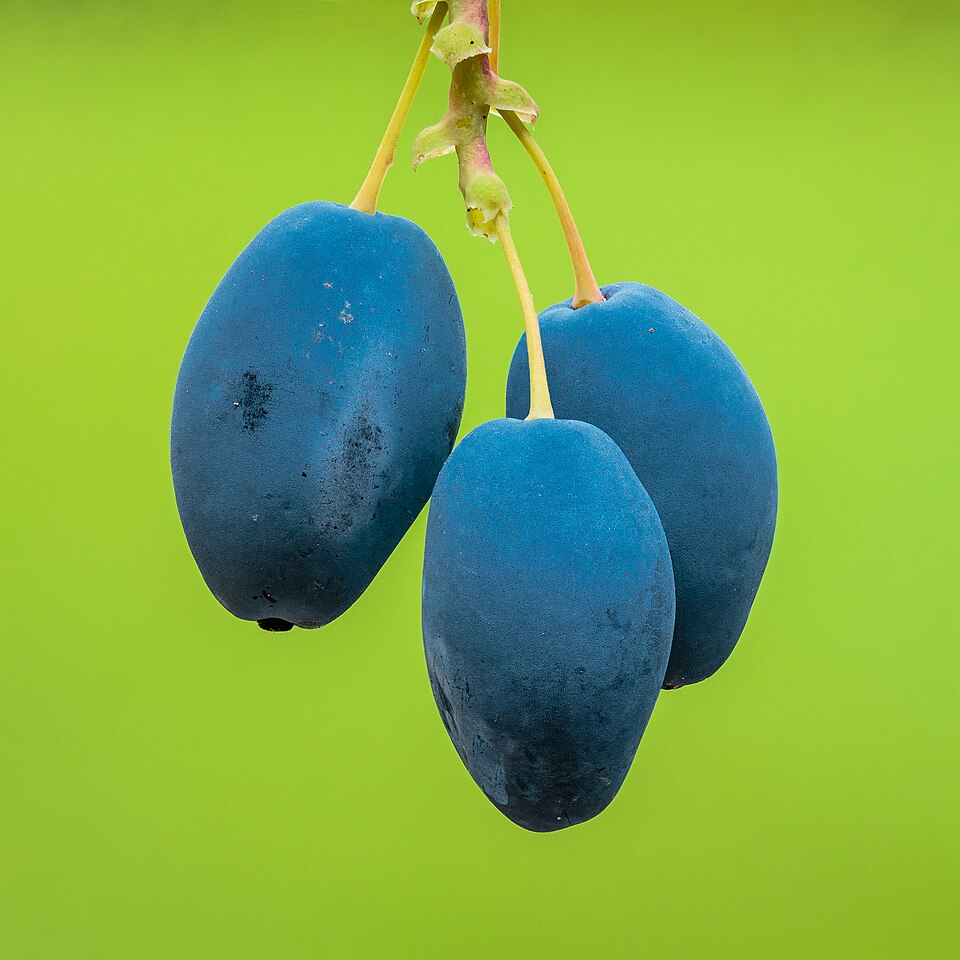
Oregon grape’s blue berries.
Oregon grape’s blue berries. Photo credit

Oregon grape brings evergreen leaves, yellow flowers and blue fruit to a shrub bed. Give it room to spread instead of placing it where it will need constant clipping.

Sun

Partial shade to full shade.

Soil & water

Moist, well-drained, acidic soil.

Full-grown size

3-10 ft tall.

Through the year

Evergreen; yellow flowers in early spring, blue-black fruit in midsummer, and foliage that may bronze in cold sunny sites.

Winter hardiness

Hardy to USDA zone 5.

Plant references

Oceanspray

Holodiscus discolor

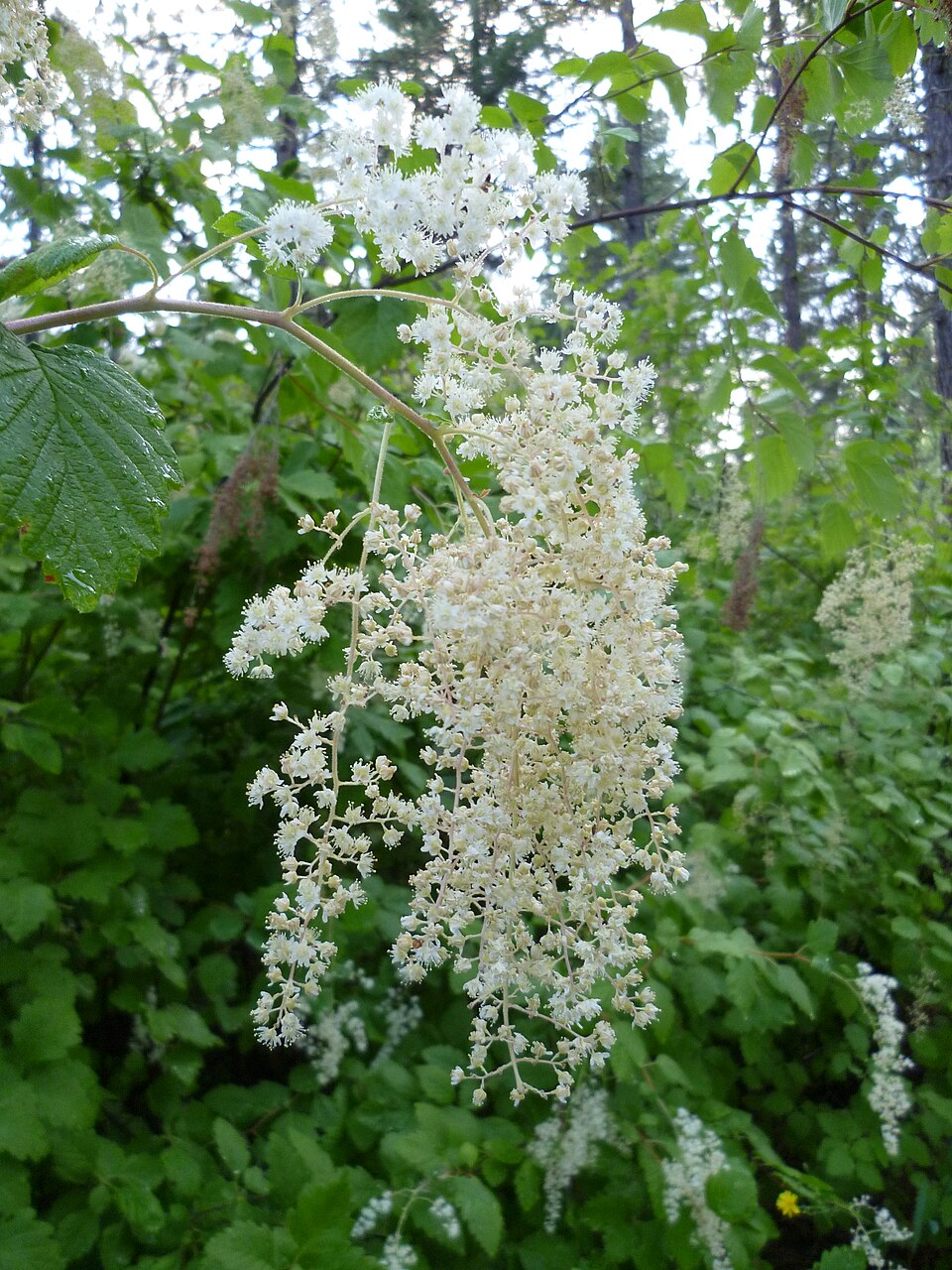
Oceanspray’s cascading white flower clusters and toothed leaves.
Oceanspray’s cascading white flower clusters and toothed leaves. Photo credit

Oceanspray is a shrub to choose for its hanging white flower clusters. Its size varies with the site, so leave room for more than the small plant you bring home.

Sun

Part shade in gardens; occurs naturally in both sun and shade.

Soil & water

Ordinary garden soil; accepts well-drained to dry sites.

Full-grown size

4-15 ft tall.

Through the year

Deciduous; creamy flowers in early summer followed by persistent brown clusters.

Winter hardiness

Hardy to USDA zone 5.

Plant references

Serviceberry

Amelanchier alnifolia

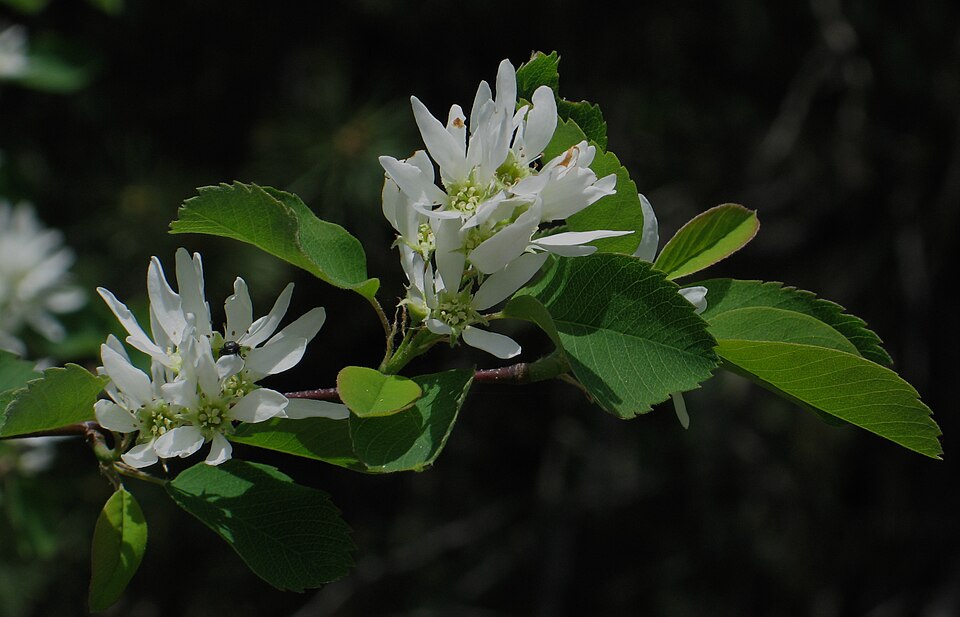
Serviceberry’s white spring flowers and green leaves.
Serviceberry’s white spring flowers and green leaves. Photo credit

Serviceberry offers white spring flowers, dark fruit and fall color. It can send up new shoots around the main plant; leave room for a thicket or plan to remove those shoots.

Sun

Full sun to part shade.

Soil & water

Ordinary garden soil; also suits moisture-retentive sites.

Full-grown size

10-30 ft tall.

Through the year

Deciduous; fragrant white flowers, purple-black edible fruit, and yellow-orange fall color.

Winter hardiness

Hardy to USDA zone 2.

Plant references

Evergreen huckleberry

Vaccinium ovatum

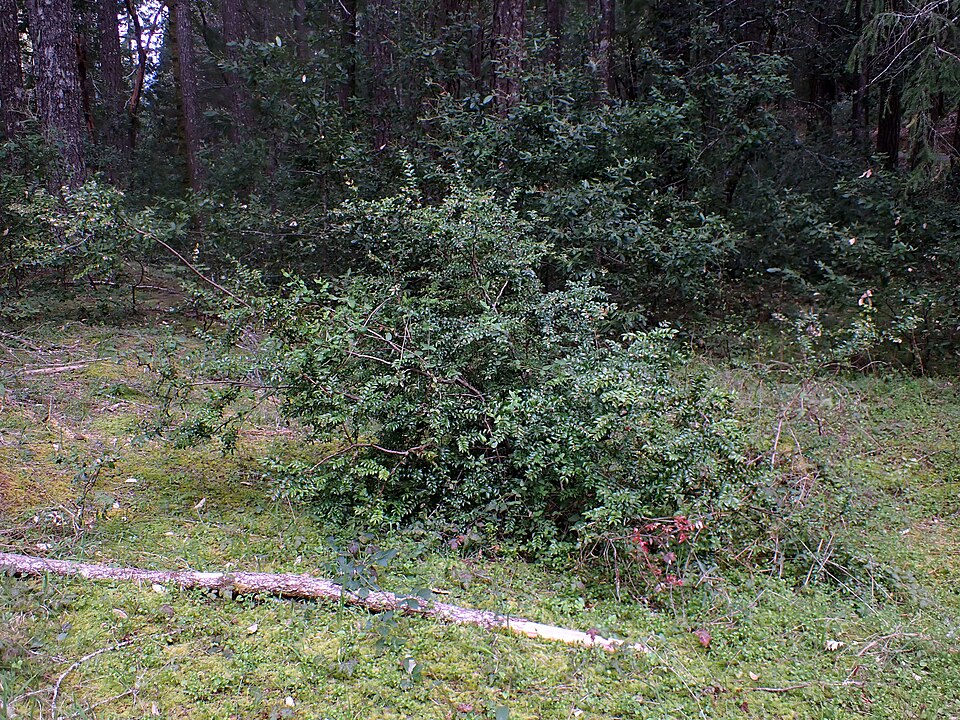
An evergreen huckleberry shrub growing in woodland.
An evergreen huckleberry shrub growing in woodland. Photo credit

Evergreen huckleberry keeps its leaves through winter and can grow much taller in some settings than others. Ask about the conditions it was grown for before fitting it into a small bed.

Sun

Full sun to part shade.

Soil & water

May need extra moisture while establishing; no fixed irrigation interval is available.

Full-grown size

Usually 3-5 ft tall, sometimes 8 ft and occasionally up to 15 ft.

Through the year

Evergreen; pale pink spring flowers followed by blue-black fruit in late summer.

Winter hardiness

Hardy to USDA zone 7.

Plant references

Western sword fern

Polystichum munitum

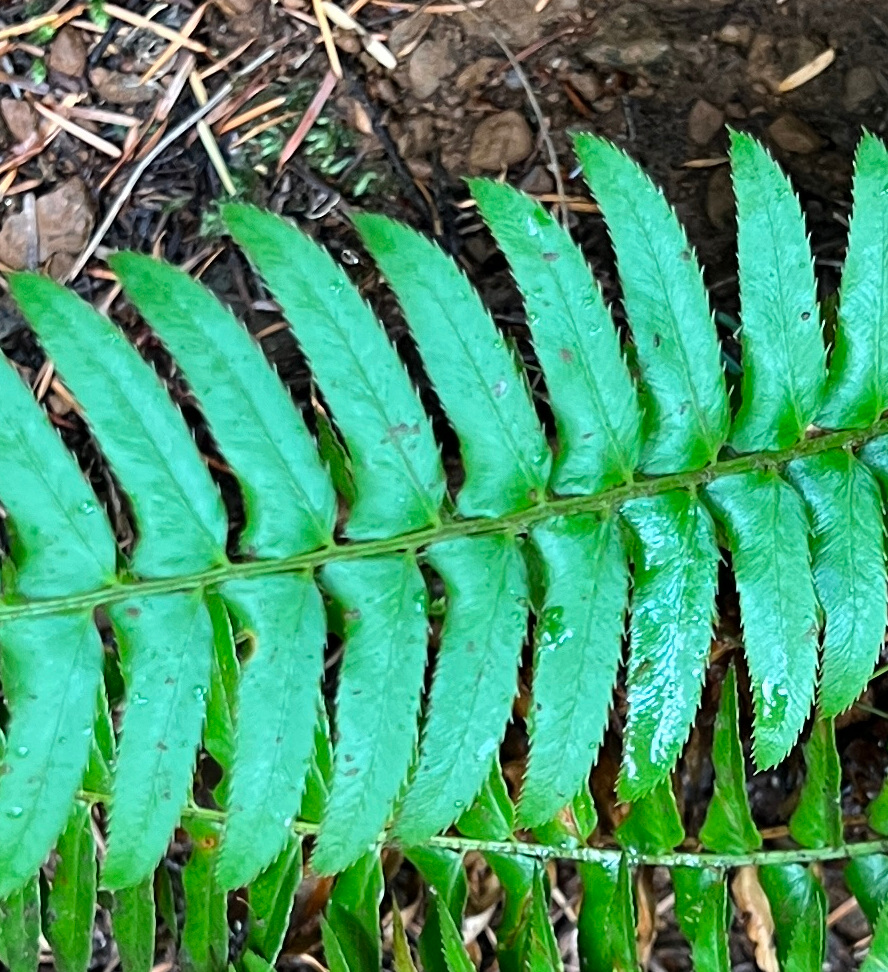
Close-up of a western sword fern frond.
Close-up of a western sword fern frond. Photo credit

Western sword fern fills a shady bed with long green fronds. Give the crown space and keep the soil from drying out while the plant settles in.

Sun

Part shade to shade; full-sun tolerance applies only to a distinct named form.

Soil & water

Rich, organic soil with ample moisture; established plants can also tolerate dry shade.

Full-grown size

Fronds 1-4 ft long and 2-10 in wide.

Through the year

Evergreen; older fronds persist through winter and new fronds emerge around March.

Winter hardiness

Hardy to USDA zone 4.

Plant references

Before you go to the nursery

Browse nurseries in Portland to find places to contact. Ask about the exact plants and varieties on your list before making a trip.

Bring a photo of the planting spot and its measurements. Note when it gets direct sun, how quickly the soil drains after watering, and whether you can water through a dry spell. Ask about the full-grown size of the exact variety on the label.

We have not confirmed local nursery listings for these plants yet. Use the botanical names above when you ask; common names can refer to more than one plant.

Sources & photo credits

Our selections draw on regional gardening references and species profiles. These are species guides; named varieties can have different sizes and needs. Photographs show the species, not nursery stock.

Local growing advice

Heteromeles arbutifolia plant profile · Oregon State University Landscape Plants · checked 2026-09-05

Native plants for western Oregon · Oregon State University Extension · checked 2026-09-05

Vine maple

Native plants for western Oregon · checked 2026-09-05

Acer circinatum plant profile · checked 2026-09-05

Botanical identity: Acer circinatum

Tall Oregon grape

Native plants for western Oregon · checked 2026-09-05

Mahonia aquifolium plant profile · checked 2026-09-05

Botanical identity: Mahonia aquifolium

Oceanspray

Native plants for western Oregon · checked 2026-09-05

Holodiscus discolor plant profile · checked 2026-09-05

Botanical identity: Holodiscus discolor

Serviceberry

Native plants for western Oregon · checked 2026-09-05

Native plants for Central Oregon home landscapes · checked 2026-09-05

Amelanchier alnifolia plant profile · checked 2026-09-05

Botanical identity: Amelanchier alnifolia

Evergreen huckleberry

Native plants for western Oregon · checked 2026-09-05

Vaccinium ovatum plant profile · checked 2026-09-05

Botanical identity: Vaccinium ovatum

Western sword fern

Native plants for western Oregon · checked 2026-09-05

Polystichum munitum plant profile · checked 2026-09-05

Botanical identity: Polystichum munitum

Winter hardiness and local weather

A USDA hardiness zone describes winter cold. It does not measure summer heat, drainage or water needs. Check your own ZIP and the label on the variety you buy.

City reference: ZIP 97205, zone 8b. A ZIP whose postal primary-city label matches this city, selected from the retained geography snapshot. It is a city reference, not your address; postal labels do not define municipal boundaries.

Median last spring frost: Feb 25; median first autumn frost: Dec 1. Station: PORTLAND KGW-TV, OR US (0.39 km from the reference ZIP). These are historical averages, not a forecast.

USDA hardiness maps · NOAA climate normals
Photography

Acer circinatum 03516.JPG by Walter Siegmund · CC BY 2.5. Wikimedia Commons thumbnail, resized from the source photograph. No additional crop or color changes.

Bessen van een Mahonia aquifolium. 17-08-2025. (actm.) 01.jpg by Agnes Monkelbaan · CC BY-SA 4.0. Wikimedia Commons thumbnail, resized from the source photograph. No additional crop or color changes.

Holodiscus discolor in flower.jpg by Thayne Tuason · CC BY-SA 4.0. Resized Wikimedia Commons thumbnail; no additional crop or color changes.

Amelanchier alnifolia 2 RF.jpg by Robert Flogaus-Faust · CC BY 4.0. Wikimedia Commons thumbnail, resized from the source photograph. No additional crop or color changes.

Evergreen Huckleberry (Vaccinium ovatum).jpg by Kollibri1969 · CC0. Wikimedia Commons thumbnail, resized from the source photograph. No additional crop or color changes.

Polystichum munitum JHT IMG 2235 cropped.jpg by Jhorthos · CC BY-SA 4.0. Wikimedia Commons thumbnail, resized from the source photograph. No additional crop or color changes.