Skip to content
PlantNurseryHQ

All city plant guides

Oklahoma City, OK · Plant guide

Plants for Oklahoma City.

Oklahoma City buyers should begin with scale. Bald cypress can become a large tree, while beautyberry and Koreanspice viburnum occupy the shrub layer. Switchgrass adds upright texture; toad lily suits shade, and annual vinca should be treated as a warm-season annual.

Updated 2026-09-06 · Sources & photo credits

Keep bald cypress for large sites

Allow roughly 30 feet of width and room for a tree that can reach 70 feet. A dwarf selection needs its own cultivar measurements.

Treat vinca as an annual

Wait for warm weather before planting annual vinca. Early cold can injure it, and disease-resistant cultivars are the safer purchase.

Bald cypress

Taxodium distichum
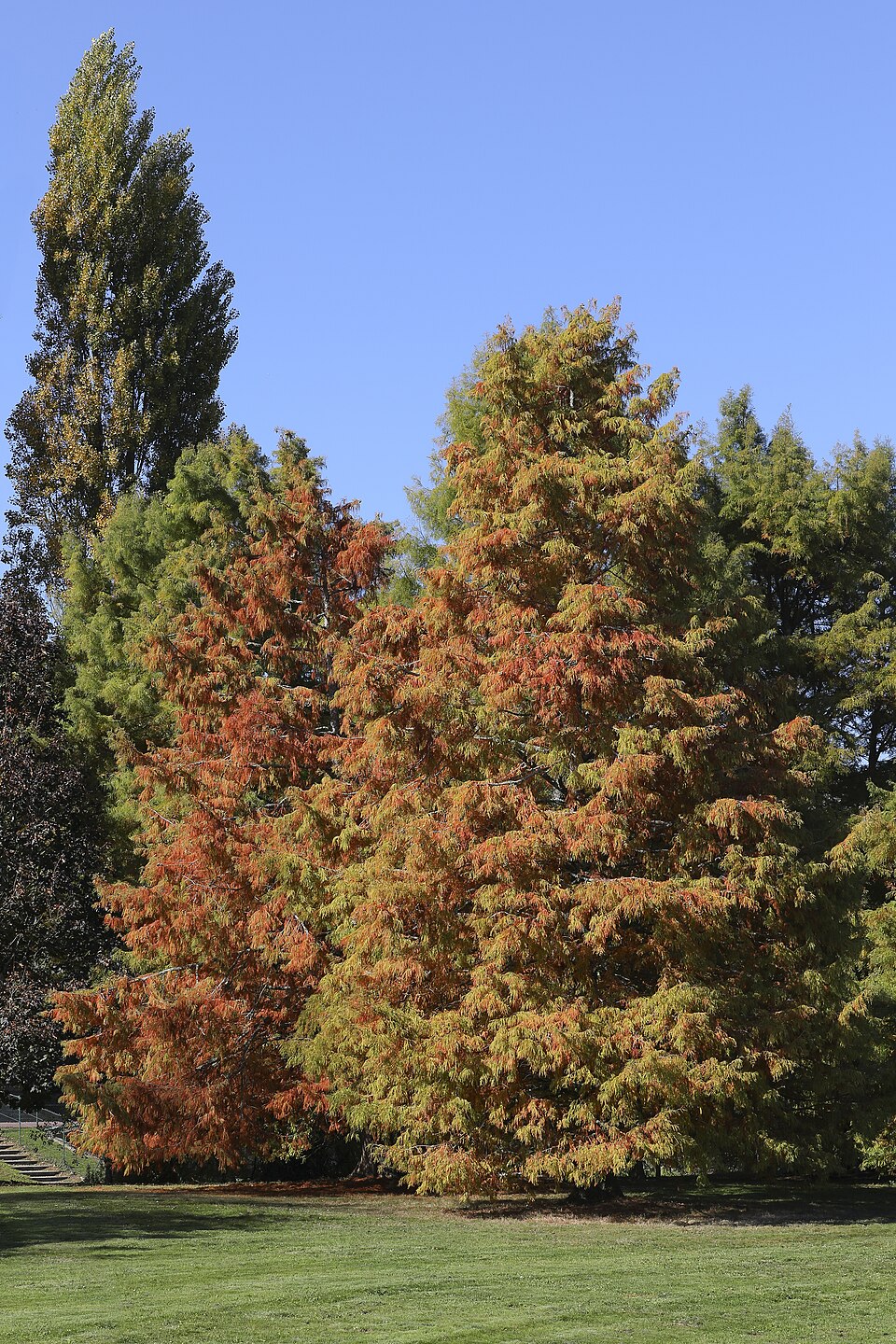
Bald cypress trees in autumn color.
Bald cypress trees in autumn color. Photo credit

Bald cypress has a soft, feathery appearance but becomes a large tree. Use it where there is room for the mature canopy and roots, and check how its eventual size fits the rest of the garden.

Sun

Full sun.

Soil & water

Well drained through flood tolerant; drought tolerant once established.

Full-grown size

To 70 ft tall × 30 ft wide.

Through the year

Russet/copper-bronze fall color then needle drop.

Winter hardiness

USDA zone 4; large-space plant; dwarf selections need cultivar-specific facts.
Plant references

American beautyberry

Callicarpa americana

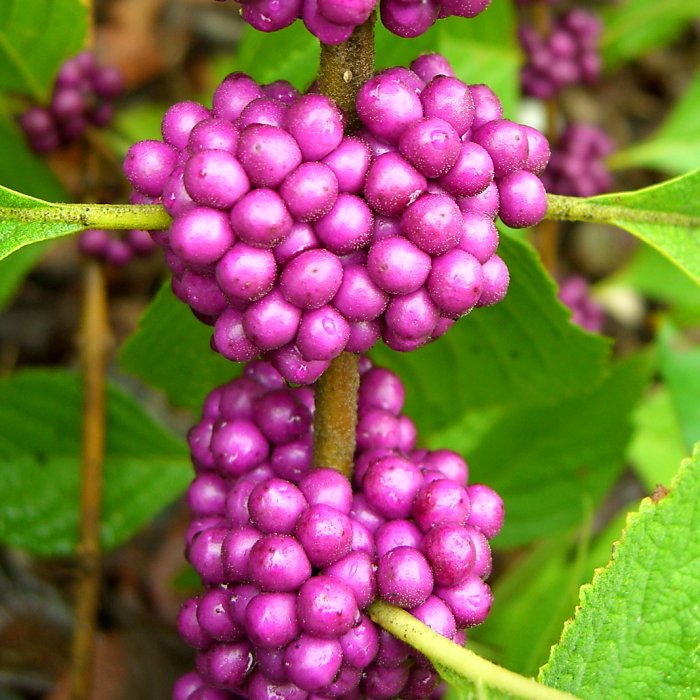
American beautyberry’s bright purple fruit clusters.
American beautyberry’s bright purple fruit clusters. Photo credit

American beautyberry is grown for the purple fruit clustered along its stems. Give it enough width to keep its natural shape. It can take shade, though a sunnier position generally brings better fruiting.

Sun

Part shade; protect from Oklahoma afternoon sun.

Soil & water

Moist, well-drained.

Full-grown size

5-10 ft tall and broad.

Through the year

Lavender midsummer flowers; purple fruit in fall.

Winter hardiness

USDA zone 6; fruit on new growth, rejuvenation pruning in winter.

Plant references

Switchgrass

Panicum virgatum

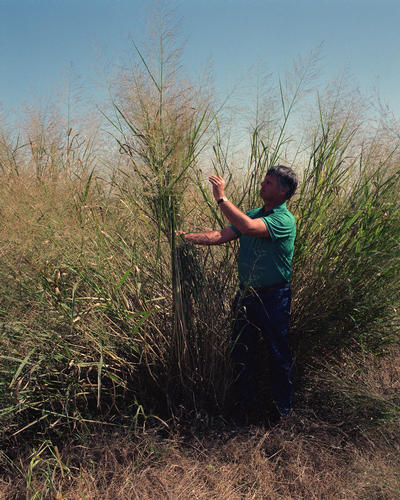
A tall switchgrass clump, with a person beside it for scale.
A tall switchgrass clump, with a person beside it for scale. Photo credit

Switchgrass adds upright stems and airy flower heads that last into winter. Give it sun and space; rich soil or too much shade can make the stems flop, and some plants spread by seed or underground stems.

Sun

Full sun to part shade.

Soil & water

Most soils, wet or dry; drought tolerant once established.

Full-grown size

3-6 ft tall.

Through the year

Purplish panicles persist winter; yellow/orange fall then tan winter.

Winter hardiness

USDA 5-9; shade/rich soil can cause flopping; may spread by rhizome/seed.

Plant references

Toad lily

Tricyrtis hirta

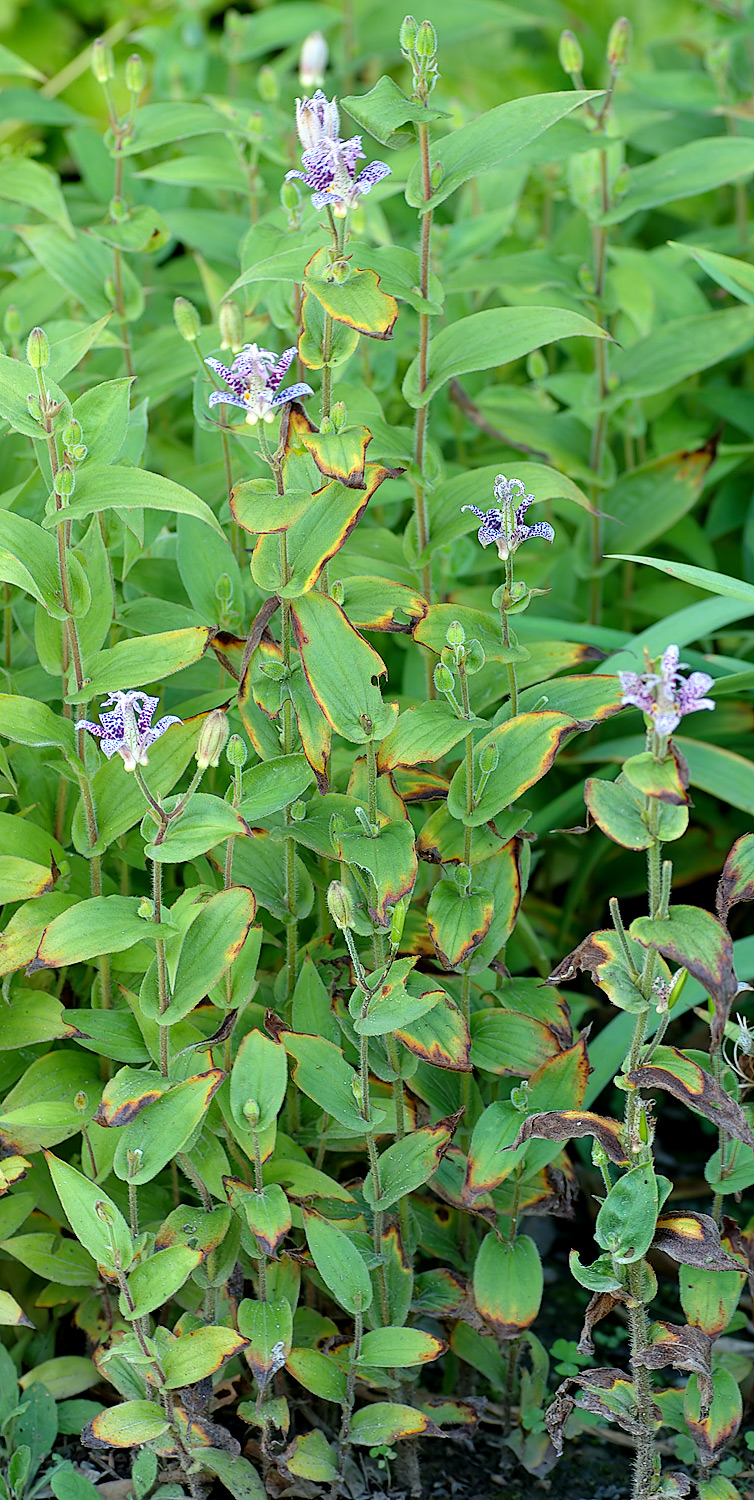
Toad lily’s spotted flowers and green leaves.
Toad lily’s spotted flowers and green leaves. Photo credit

Toad lily is worth putting close to a shady path, where you can see its small, spotted flowers in late summer and fall. It needs moist, well-drained soil rather than a hot, exposed bed.

Sun

Part to full shade.

Soil & water

Moist, well-drained; tolerates wet and some drought.

Full-grown size

2-3 ft tall × about 2 ft wide.

Through the year

Spotted pale-lilac flowers late summer-early fall.

Winter hardiness

USDA 4-8; place close enough to see small flowers.

Plant references

Koreanspice viburnum

Viburnum carlesii

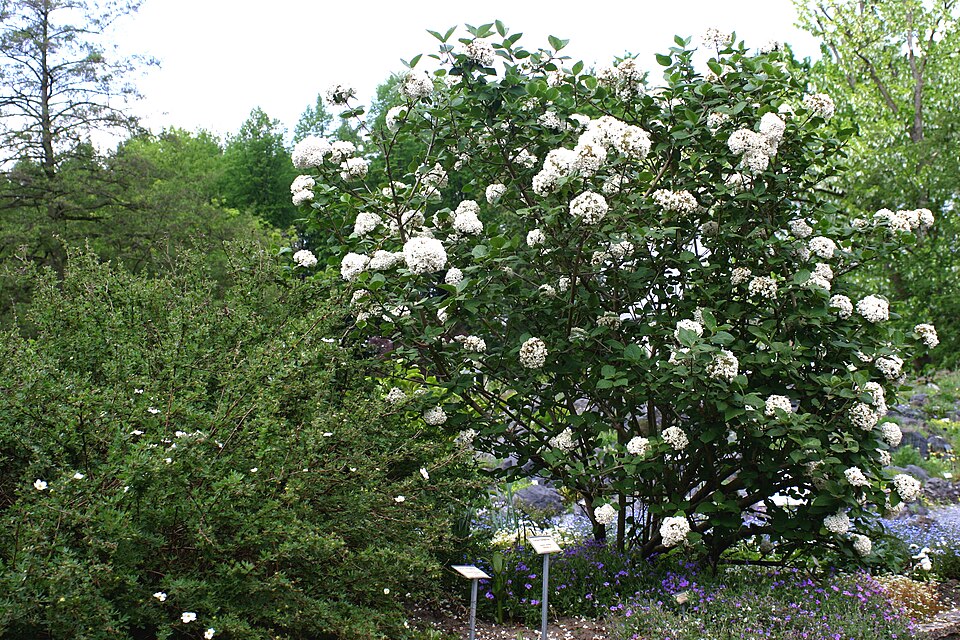
Koreanspice viburnum covered in white spring flowers.
Koreanspice viburnum covered in white spring flowers. Photo credit

Korean spice viburnum is grown for fragrant spring flowers and a rounded shrub form. Allow space for its mature width and check the variety’s performance in your local heat before buying.

Sun

Full sun to part shade.

Soil & water

Moist, well-drained; heat/drought tolerant after establishment.

Full-grown size

4-5 ft tall and broad.

Through the year

Fragrant white/pink spring flowers; red-to-black fruit late summer; wine-red fall.

Winter hardiness

USDA zones 5-7; verify warmer microclimate; sex/fruiting details not stated.

Plant references

Annual vinca

Catharanthus roseus

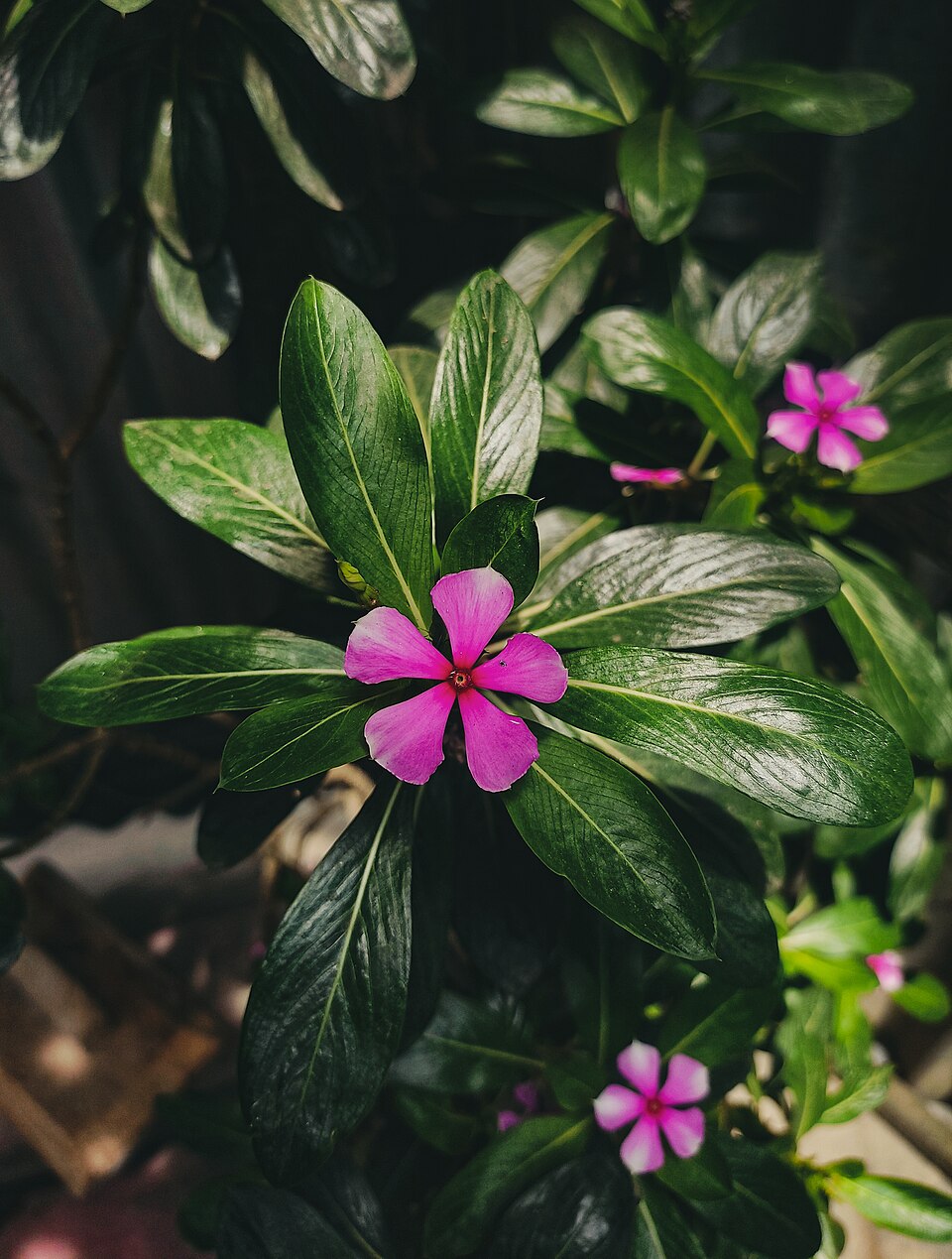
Madagascar periwinkle’s pink flowers and glossy leaves.
Madagascar periwinkle’s pink flowers and glossy leaves. Photo credit

Annual vinca brings warm-season flowers to a sunny bed without asking for wet soil. Wait for warm conditions before planting, use a well-drained spot and choose a disease-resistant variety.

Sun

Full sun to part shade.

Soil & water

Well-drained, slightly dry.

Full-grown size

6-12 in tall × 8-24 in wide by cultivar.

Through the year

White/pink/red/purple warm-season flowers.

Winter hardiness

Use as annual; chill injury if planted too early; choose disease-resistant cultivar.

Plant references

Before you go to the nursery

Browse nurseries in Oklahoma City to find places to contact. Ask about the exact plants and varieties on your list before making a trip.

Bring a photo of the planting spot and its measurements. Note when it gets direct sun, how quickly the soil drains after watering, and whether you can water through a dry spell. Ask about the full-grown size of the exact variety on the label.

We have not confirmed local nursery listings for these plants yet. Use the botanical names above when you ask; common names can refer to more than one plant.

Sources & photo credits

Our selections draw on regional gardening references and species profiles. These are species guides; named varieties can have different sizes and needs. Photographs show the species, not nursery stock.

Local growing advice

Oklahoma Proven: Plant Selections for Oklahoma · Oklahoma State University Extension · checked 2026-09-05

Bald cypress

Oklahoma Proven: Plant Selections for Oklahoma · checked 2026-09-05

Botanical identity: Taxodium distichum

American beautyberry

Oklahoma Proven: Plant Selections for Oklahoma · checked 2026-09-05

Botanical identity: Callicarpa americana

Switchgrass

Oklahoma Proven: Plant Selections for Oklahoma · checked 2026-09-05

Botanical identity: Panicum virgatum

Toad lily

Oklahoma Proven: Plant Selections for Oklahoma · checked 2026-09-05

Botanical identity: Tricyrtis hirta

Koreanspice viburnum

Oklahoma Proven: Plant Selections for Oklahoma · checked 2026-09-05

Botanical identity: Viburnum carlesii

Annual vinca

Oklahoma Proven: Plant Selections for Oklahoma · checked 2026-09-05

Botanical identity: Catharanthus roseus

Winter hardiness and local weather

A USDA hardiness zone describes winter cold. It does not measure summer heat, drainage or water needs. Check your own ZIP and the label on the variety you buy.

City reference: ZIP 73132, zone 7b. A ZIP whose postal primary-city label matches this city, selected from the retained geography snapshot. It is a city reference, not your address; postal labels do not define municipal boundaries.

Median last spring frost: Apr 2; median first autumn frost: Nov 4. Station: OKLAHOMA CITY POST AP, OK US (2.30 km from the reference ZIP). These are historical averages, not a forecast.

USDA hardiness maps · NOAA climate normals

Photography

2025 Taxodium distichum no Parque de Galeras, Santiago - Galiza.jpg by Lmbuga · CC BY-SA 4.0. Resized Commons thumbnail to max 960px width; no crop or color change.

American Beautyberry (1002937481).jpg by Jason Hollinger · CC BY 2.0. Resized Commons thumbnail to max 960px width; no crop or color change.

Panicum virgatum.jpg by Warren Gretz, DOE/NREL · Public domain. Resized Commons thumbnail to max 960px width; no crop or color change.

Tricyrtis hirta (aka).jpg by André Karwath aka Aka · CC BY-SA 2.5. None; original file retained.

BotGartenMuenster KoreaSchneeball 6672.jpg by Rüdiger Wölk This photo was taken by Rüdiger Wölk. Please credit this photo Rüdiger Wölk, Münster. View all photos (large page) of Rüdiger Wölk I would also appreciate an email to [email protected] with details of use. Für Hinweise auf Veröffentlichungen ([email protected]) oder Belegexemplare bin ich Ihnen dankbar. · CC BY-SA 2.5. Resized Commons thumbnail to max 960px width; no crop or color change.

Catharanthus roseus, Kurigram, Bangladesh.jpg by Tanvir Rahat · CC BY-SA 4.0. Resized Commons thumbnail to max 960px width; no crop or color change.