Skip to content
PlantNurseryHQ

All city plant guides

Tampa, FL · Plant guide

Plants for Tampa.

Tampa gardens can layer Walter’s viburnum, beautyberry and yaupon holly below a properly spaced live oak. Scarlet sage supplies lower flowers, while crape myrtle adds summer bloom and bark interest. Match every purchase to salt exposure and exact variety size.

Updated 2026-09-06 · Sources & photo credits

Give live oak room

Reserve live oak for a site with more than 60 feet of available spread and plan for structural pruning while the tree is young.

Make room for summer flowers

Put scarlet sage in sun for more flowers, with a little space around it for seedlings. Cut it back after flowering and foliage dieback if it becomes untidy.

Walter’s viburnum

Viburnum obovatum

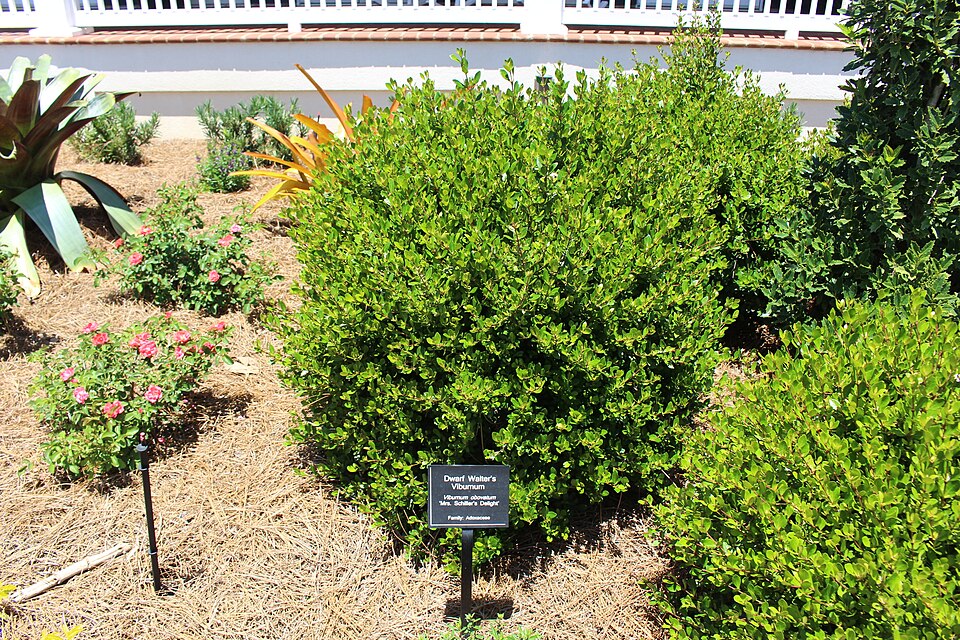
Walter’s viburnum growing as a dense green shrub.
Walter’s viburnum growing as a dense green shrub. Photo credit

Walter’s viburnum gives you white spring flowers and evergreen structure. The species can become a substantial shrub or small tree; ask for the exact mature size if you are buying a dwarf variety. Avoid salt-exposed sites.

Sun

Full sun to partial shade.

Soil & water

Varied soils; drought tolerant after establishment; not salt tolerant.

Full-grown size

Up to 20 ft; prune smaller; dwarf cultivars differ.

Through the year

White spring flowers; fall fruit; evergreen zones 7-10.

Winter hardiness

USDA 7-10; remove suckers yearly and prune for structure; cultivar size must remain exact.

Plant references

American beautyberry

Callicarpa americana

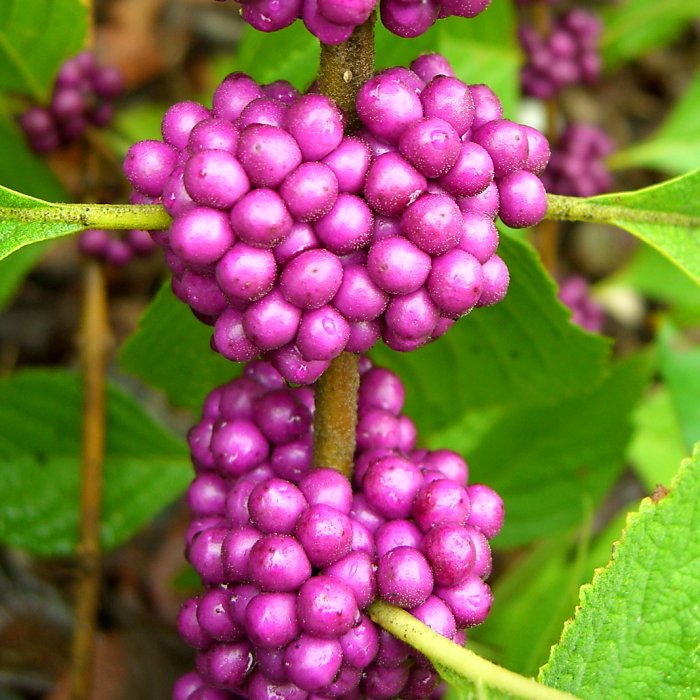
American beautyberry’s bright purple fruit clusters.
American beautyberry’s bright purple fruit clusters. Photo credit

American beautyberry is grown for the purple fruit clustered along its stems. Give it enough width to keep its natural shape. It can take shade, though a sunnier position generally brings better fruiting.

Sun

Full sun for best fruit; heavy/filtered shade tolerated.

Soil & water

Well-drained rich or poor sandy soil; little/no irrigation after establishment.

Full-grown size

3-8 ft tall × 4-8 ft wide.

Through the year

Lavender-pink spring-summer flowers; purple fruit by September into leaf drop.

Winter hardiness

Florida zones 8a-10b; not salt tolerant; may self-seed; usually under 10-year life.

Plant references

Yaupon holly

Ilex vomitoria

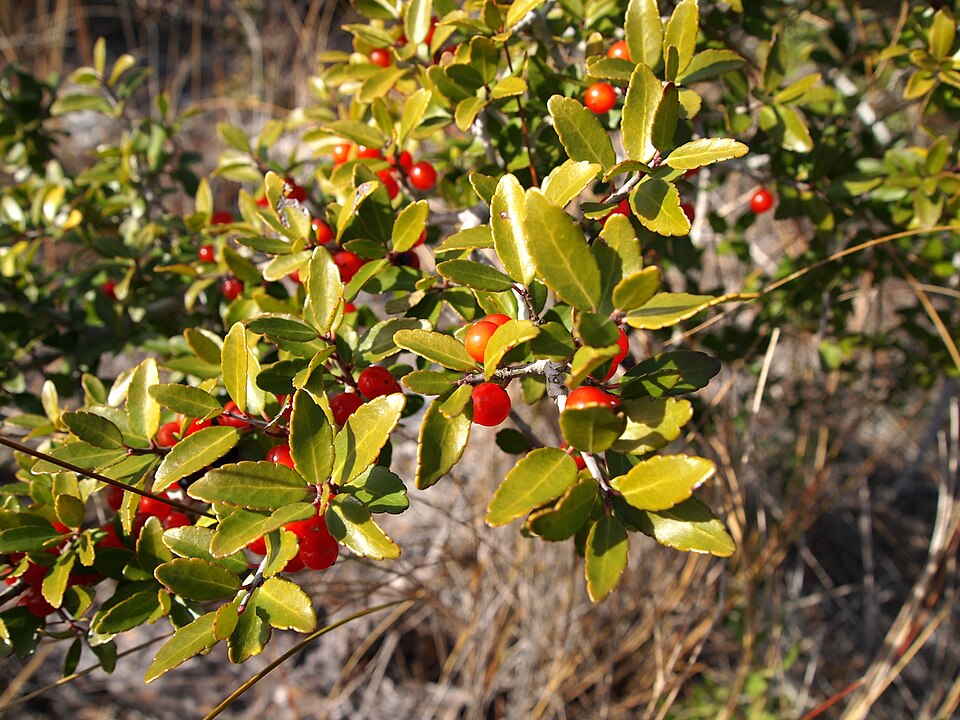
Yaupon holly with red berries among its small evergreen leaves.
Yaupon holly with red berries among its small evergreen leaves. Photo credit

Yaupon holly can become a small evergreen tree, so check the variety before using it as a low hedge. If berries are the attraction, ask for a female plant and a suitable nearby pollinator.

Sun

Full sun to deep shade.

Soil & water

Good drainage; moist to occasionally dry/wet; occasional flooding.

Full-grown size

10-20.5 ft tall × 8-12 ft wide.

Through the year

Evergreen; female red/orange fruit fall-winter.

Winter hardiness

USDA 7a-9b; dioecious; fruit requires both sexes; verify South Florida performance/site.

Plant references

Live oak

Quercus virginiana

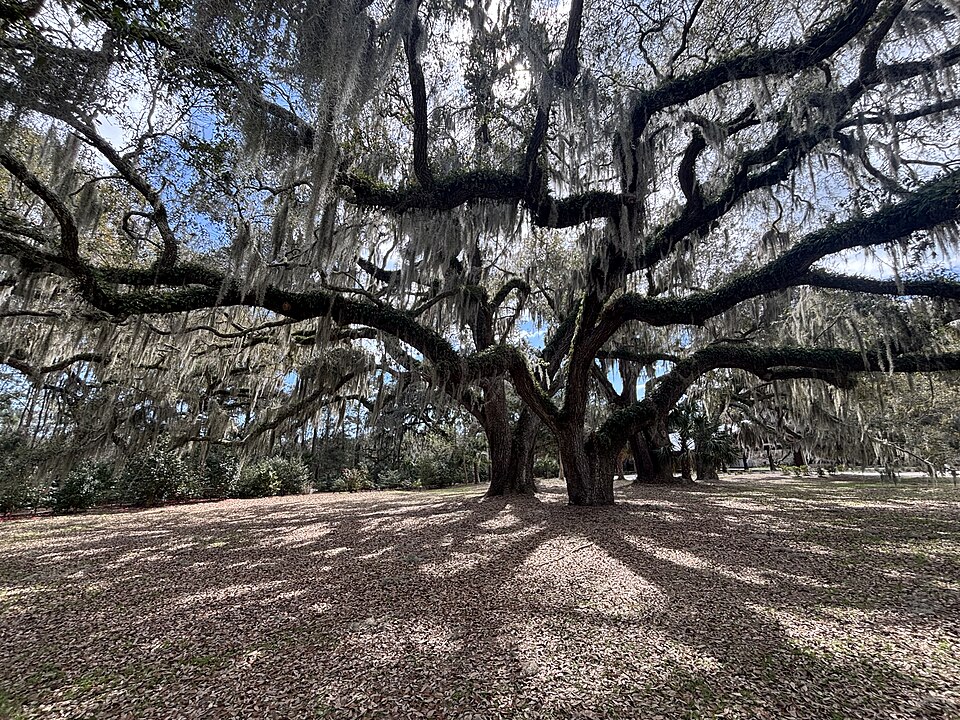
A mature live oak with long, spreading branches.
A mature live oak with long, spreading branches. Photo credit

Live oak is a long-term choice for a large site. Its canopy can spread far beyond the trunk; reserve generous space and plan for structural pruning while the tree is young.

Sun

Full sun to partial shade.

Soil & water

Prefers moist acidic sand/loam/clay; tolerates alkaline soil, salt and drought.

Full-grown size

40-80 ft tall × 30-100 ft wide.

Through the year

Evergreen leaves; spring catkins and acorns.

Winter hardiness

UF 7b-10b; NC profile 8a-10b; needs more than 60 ft space and structural pruning.

Plant references

Scarlet sage

Salvia coccinea

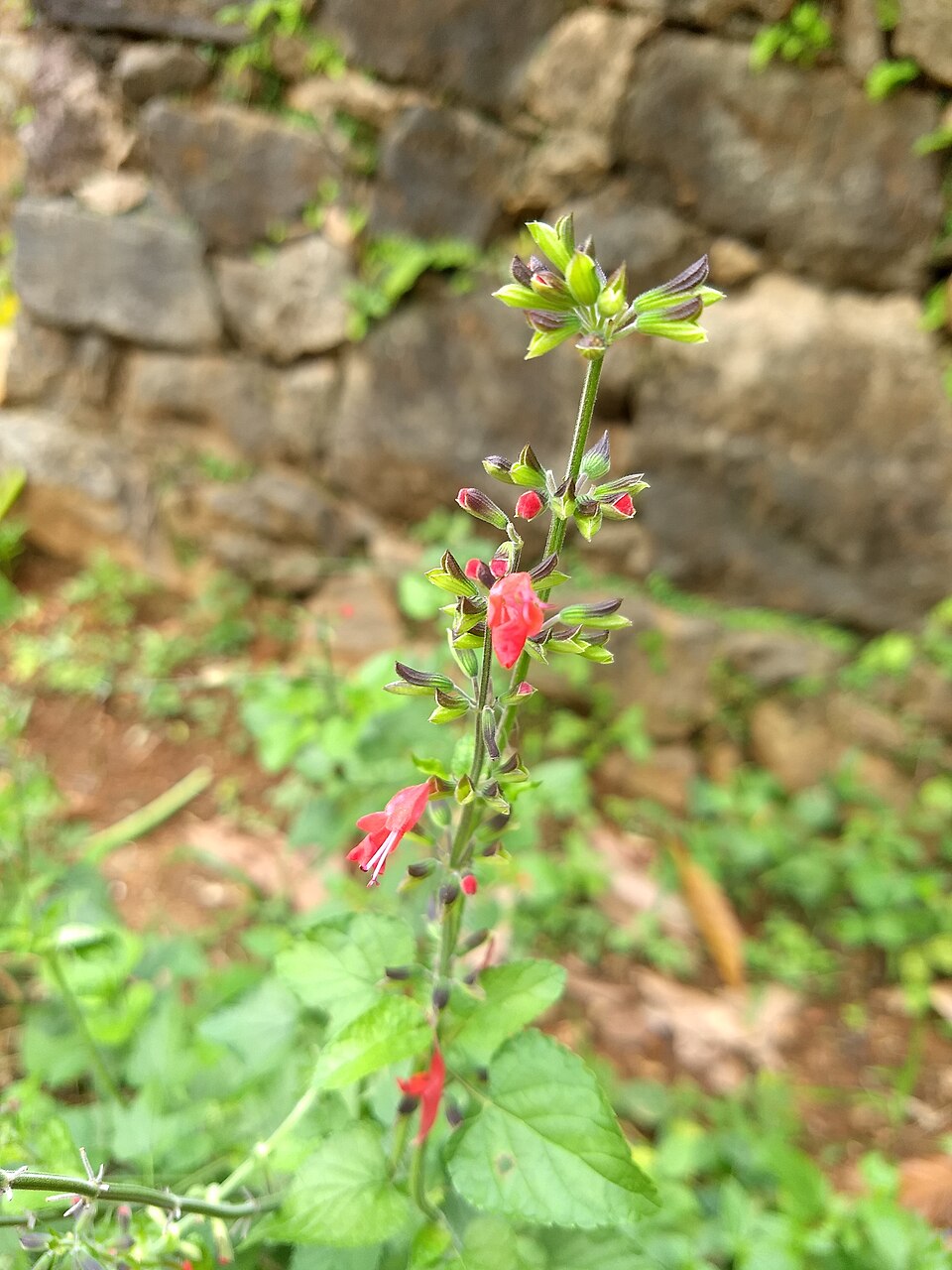
Scarlet sage’s red flowers on slender stems.
Scarlet sage’s red flowers on slender stems. Photo credit

Scarlet sage brings flowers to the lower part of the garden through the hottest months. Give it sun for a stronger display and room for seedlings if you want it to spread.

Sun

Full sun gives more flowers; partial shade is also suitable.

Soil & water

Prefers moist, well-drained soil. Tolerates some drought once established; soil salt tolerance is not established.

Full-grown size

2–4 ft tall and 1–2 ft wide.

Through the year

Usually red flowers from spring through fall; pink and white forms also occur. The flowering season lasts longer in warm climates.

Winter hardiness

USDA zones 7–11. May spread by seed; cut back after flowering and foliage dieback if needed.

Plant references

Common crape myrtle

Lagerstroemia indica

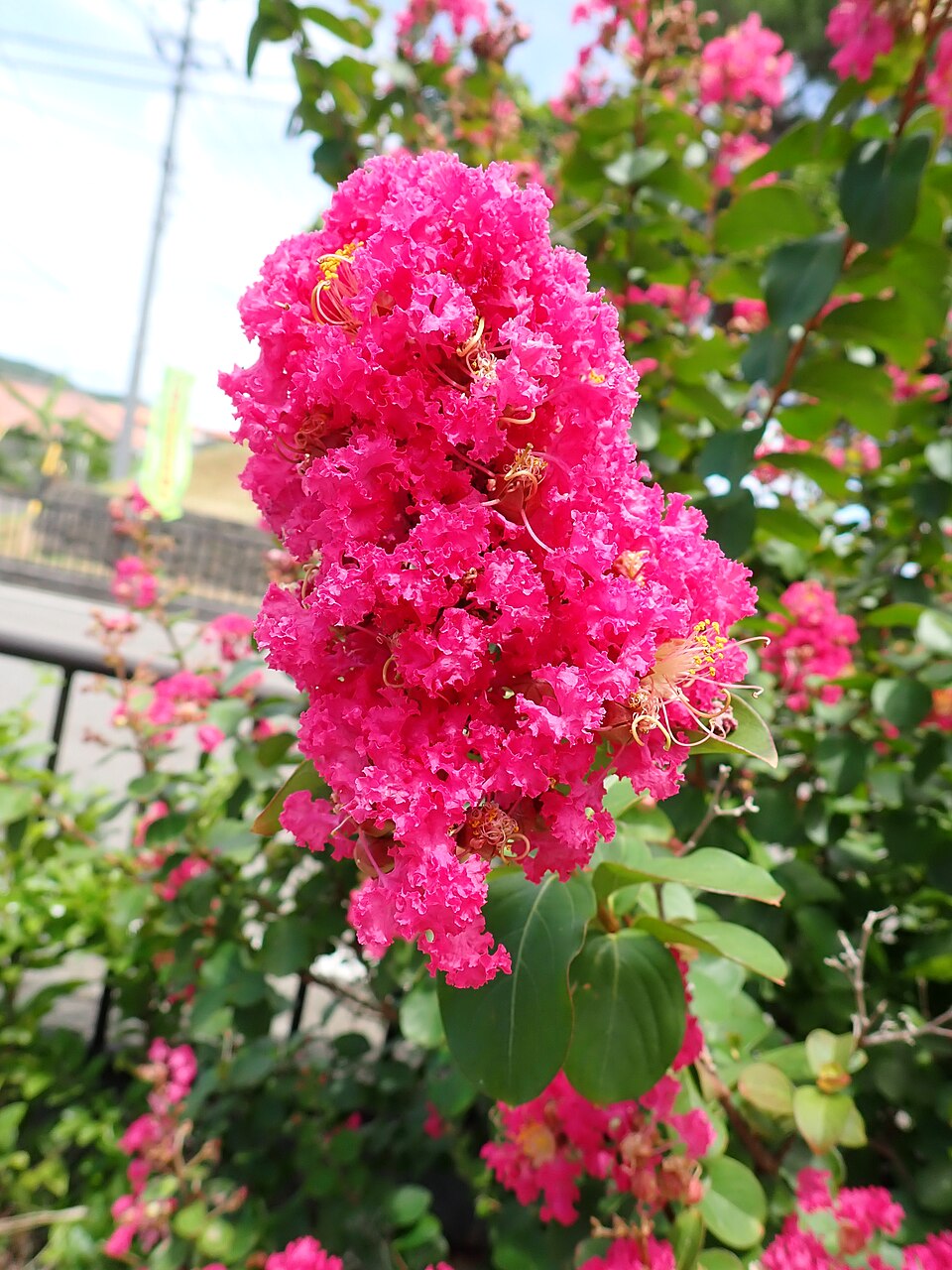
Crape myrtle flowers above green leaves.
Crape myrtle flowers above green leaves. Photo credit

Summer flowers and peeling bark make crape myrtle useful beyond a single season. Choose the variety for its full-grown size and disease resistance, then give it room instead of relying on repeated heavy pruning.

Sun

Full sun.

Soil & water

Moist, well-drained; occasionally dry/wet after establishment.

Full-grown size

6-30 ft tall/wide by variety.

Through the year

Flowers July-September; fall color; exfoliating bark.

Winter hardiness

Flowers well in zones 9 and 10. Choose a variety suited to the space, and ask about disease resistance.

Plant references

Before you go to the nursery

Browse nurseries in Tampa to find places to contact. Ask about the exact plants and varieties on your list before making a trip.

Bring a photo of the planting spot and its measurements. Note when it gets direct sun, how quickly the soil drains after watering, and whether you can water through a dry spell. Ask about the full-grown size of the exact variety on the label.

We have not confirmed local nursery listings for these plants yet. Use the botanical names above when you ask; common names can refer to more than one plant.

Sources & photo credits

Our selections draw on regional gardening references and species profiles. These are species guides; named varieties can have different sizes and needs. Photographs show the species, not nursery stock.

Local growing advice

Live oaks for Florida landscapes · University of Florida IFAS Gardening Solutions · checked 2026-09-05

Quercus virginiana plant profile · NC State Extension Plant Toolbox · checked 2026-09-05

Salvia coccinea: Scarlet Salvia, Scarlet Sage · Edward F. Gilman, Ryan W. Klein and Gail Hansen / UF IFAS Extension · checked 2026-09-05

Walter’s Viburnum · University of Florida IFAS Gardening Solutions · checked 2026-09-05

Beautyberry · University of Florida IFAS Gardening Solutions · checked 2026-09-05

Small trees for Florida landscapes · University of Florida IFAS Gardening Solutions · checked 2026-09-05

Florida-Friendly Landscaping Pattern Book: South Florida · UF/IFAS Extension · checked 2026-09-06

Plants and drought in Florida · University of Florida IFAS Gardening Solutions · checked 2026-09-05

Lagerstroemia indica: Crapemyrtle · University of Florida IFAS Extension · checked 2026-09-05

Walter’s viburnum

Walter’s Viburnum · checked 2026-09-05

Botanical identity: Viburnum obovatum

American beautyberry

Beautyberry · checked 2026-09-05

Botanical identity: Callicarpa americana

Yaupon holly

Ilex vomitoria plant profile · checked 2026-09-05

Botanical identity: Ilex vomitoria

Live oak

Quercus virginiana plant profile · checked 2026-09-05

Botanical identity: Quercus virginiana

Scarlet sage

Salvia coccinea: Scarlet Salvia, Scarlet Sage · checked 2026-09-05

Botanical identity: Salvia coccinea

Common crape myrtle

Lagerstroemia indica plant profile · checked 2026-09-05

Lagerstroemia indica: Crapemyrtle · checked 2026-09-05

Botanical identity: Lagerstroemia indica

Winter hardiness and local weather

A USDA hardiness zone describes winter cold. It does not measure summer heat, drainage or water needs. Check your own ZIP and the label on the variety you buy.

City reference: ZIP 33609, zone 10a. A ZIP whose postal primary-city label matches this city, selected from the retained geography snapshot. It is a city reference, not your address; postal labels do not define municipal boundaries.

Frost is rare here; most years see little or no hard freeze. Station: TAMPA INTL AP, FL US (3.89 km from the reference ZIP). These are historical averages, not a forecast.

USDA hardiness maps · NOAA climate normals
Photography

Coastal Georgia Botanical Gardens, Dwarf Walter's Viburnum Obovatum.jpg by Michael Rivera · CC BY-SA 4.0. Resized Commons thumbnail to max 960px width; no crop or color change.

American Beautyberry (1002937481).jpg by Jason Hollinger · CC BY 2.0. Resized Commons thumbnail to max 960px width; no crop or color change.

Ilex vomitoria.jpg by Luteus · CC BY 3.0. Replaced unsuitable image; resized Commons thumbnail to max 960px width; no crop or color change.

Honey Horn live oaks, Hilton Head Island, South Carolina.jpg by FranzKafkasWiki · CC BY 4.0. Resized Commons thumbnail to max 960px width; no crop or color change.

Salvia coccinea-, scarlet sage.jpg by Renjusplace · CC BY-SA 3.0. Added regional replacement; resized Commons thumbnail to max 960px width; no crop or color change.

Lagerstroemia indica (red) in Ishigaki, Okinawa.jpg by M108t · CC BY 4.0. Replaced prior unsuitable image; resized Commons thumbnail to max 960px width; no crop or color change.