Skip to content
PlantNurseryHQ

All city plant guides

San Jose, CA · Plant guide

Plants for San Jose.

Toyon, coffeeberry and deergrass give a San Jose planting year-round structure without relying on a large tree. California fuchsia and buckwheat add flowers with low water after establishment. Reserve coast live oak for a site that can protect its expansive root zone.

Updated 2026-09-06 · Sources & photo credits

Protect oak root space

Reserve coast live oak for sites that can support its broad crown and roots, and prune during the dry season.

Check waterfront exposure

Wind and salt exposure vary sharply near the bay. Check salt tolerance for each species before planting it on an exposed waterfront site.

Toyon

Heteromeles arbutifolia

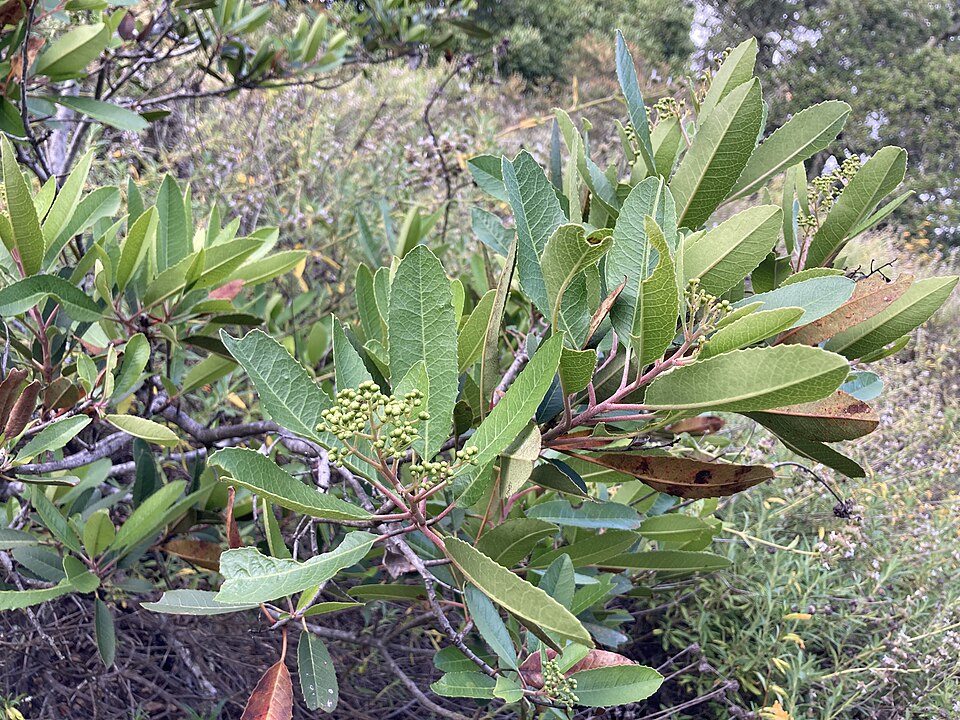
Toyon’s leathery evergreen leaves along branching stems.
Toyon’s leathery evergreen leaves along branching stems. Photo credit

Toyon gives you green leaves year-round, summer flowers and red berries later in the year. Let it grow as a large shrub or small tree, with enough room for its branches to spread.

Sun

Full sun to shade.

Soil & water

Very low water once established; occasional deep watering once or twice monthly can be used.

Full-grown size

8-15 ft tall and commonly 6-12 ft wide; some settings produce a spread near 20 ft.

Through the year

Evergreen; flowers May-August followed by red fruit in fall and winter.

Winter hardiness

Hardy to USDA zone 7.

Plant references

Deergrass

Muhlenbergia rigens

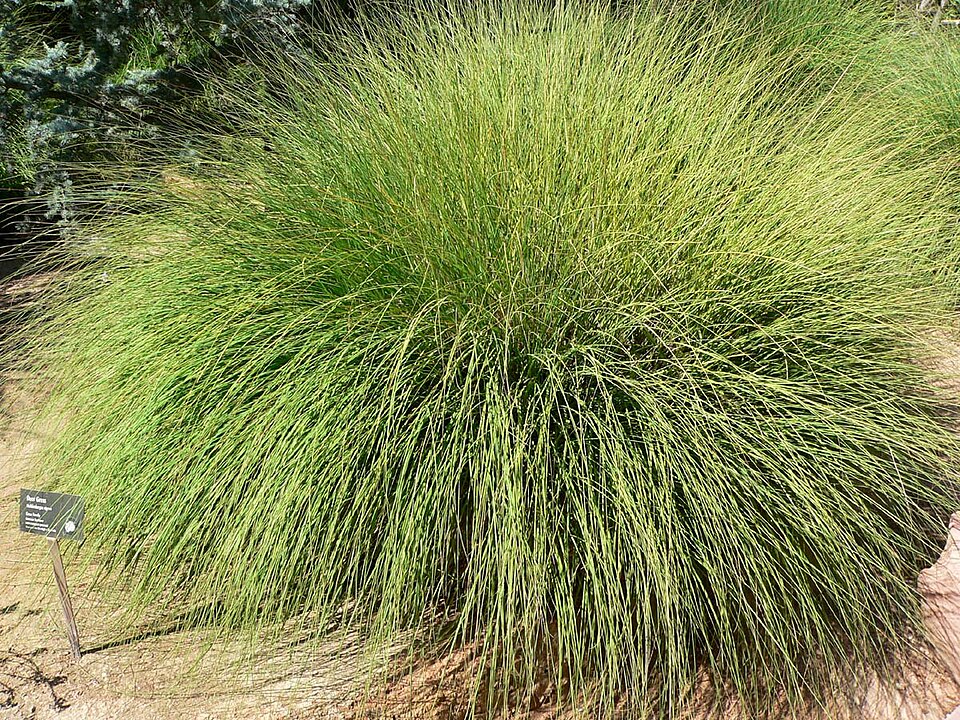
Deergrass forms a broad, upright clump.
Deergrass forms a broad, upright clump. Photo credit

Deergrass makes a broad fountain of fine leaves. One mature clump can fill a six-foot-wide space, so measure the bed before adding several.

Sun

Full sun to partial shade; some plantings also use it in shade.

Soil & water

Low to moderate water; occasional deep watering once or twice monthly can be used.

Full-grown size

About 6 ft tall × 6 ft wide.

Through the year

Flowers in summer; cut to the ground about every three years if rejuvenation is needed.

Winter hardiness

Published hardiness ranges differ: USDA zones 6-9, while many nurseries use 7-10.

Plant references

California fuchsia

Epilobium canum

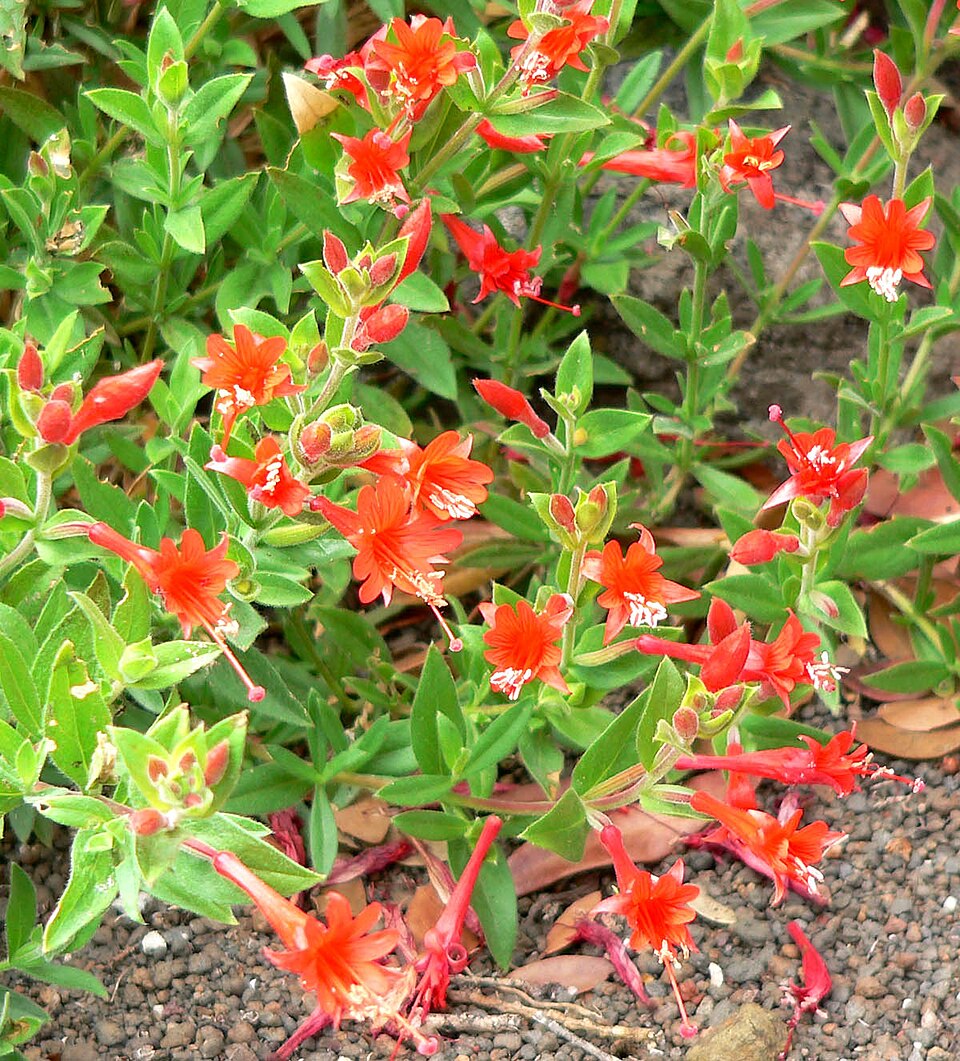
California fuchsia’s red tubular flowers and green leaves.
California fuchsia’s red tubular flowers and green leaves. Photo credit

California fuchsia keeps red flowers coming into late summer and fall. Ask which form you are buying: some stay low, while others grow several feet tall.

Sun

Full sun to part shade; afternoon shade helps in very hot settings.

Soil & water

Low water once established; occasional summer water may improve bloom in hot sites.

Full-grown size

6 in-4 ft tall with roughly equal width, depending on form.

Through the year

Blooms late summer through fall; stems may die back or be cut down after flowering.

Winter hardiness

Hardy in USDA zones 7-10.

Plant references

Coast live oak

Quercus agrifolia

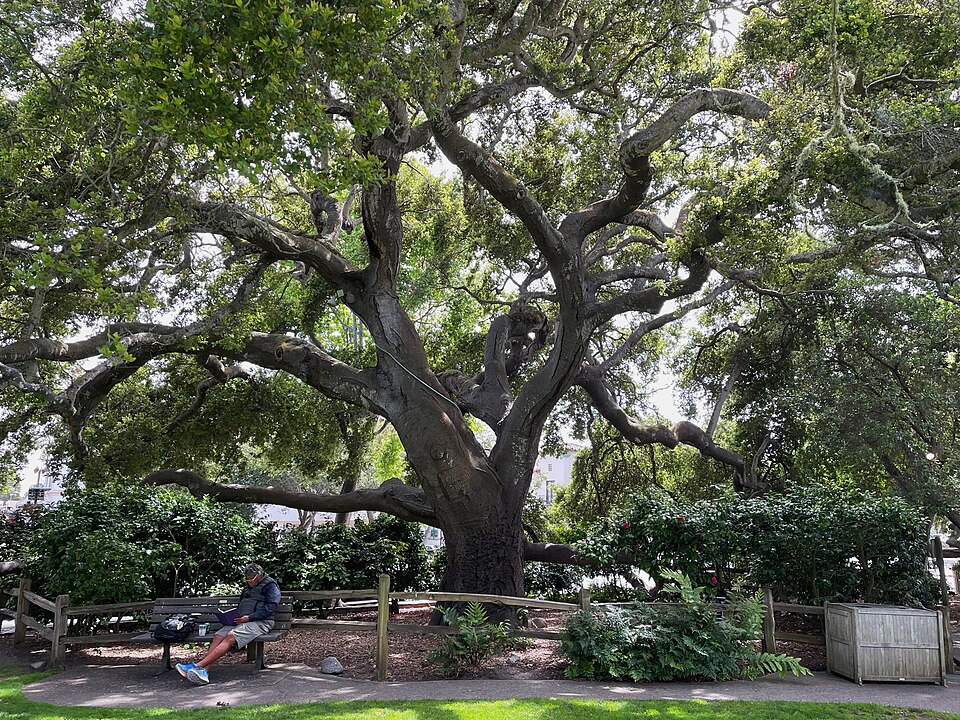
A mature coast live oak with a broad, spreading canopy.
A mature coast live oak with a broad, spreading canopy. Photo credit

Coast live oak is a tree for a generous space. Its evergreen canopy can become wider than a small yard, and established trees need care around their roots.

Sun

Full sun to shade.

Soil & water

Very low water once established; irrigation frequency depends on site and tree age.

Full-grown size

30-80 ft tall with a 30-70 ft or broader crown.

Through the year

Evergreen; sheds many older leaves in spring and produces acorns in fall.

Winter hardiness

Hardy to USDA zone 8.

Plant references

California coffeeberry

Frangula californica

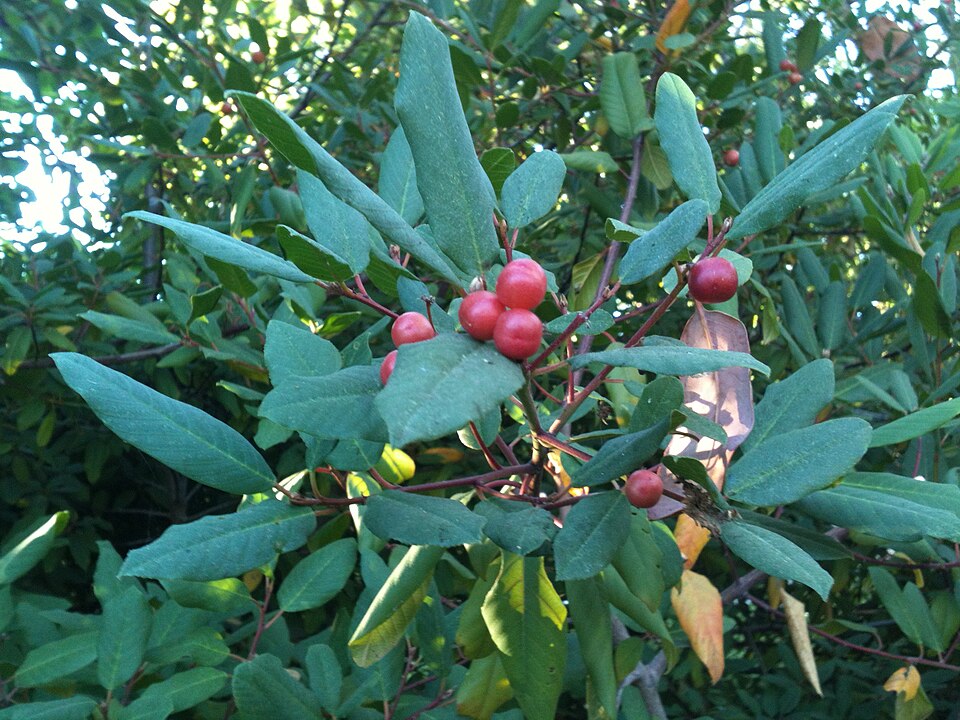
Coffeeberry’s ripening fruit and evergreen leaves.
Coffeeberry’s ripening fruit and evergreen leaves. Photo credit

Coffeeberry works where you want an evergreen shrub with room to grow. Check the variety and expected size before planting; a large form can reach roughly 15 feet tall.

Sun

Cool sun.

Soil & water

Low water once established.

Full-grown size

About 15 ft tall × 10 ft wide in Southern California; commonly 6-10 ft tall and wide in Bay Area plantings.

Through the year

Evergreen; flowers early to midseason followed by fruit.

Winter hardiness

Hardy to USDA zone 7.

Plant references

California buckwheat

Eriogonum fasciculatum

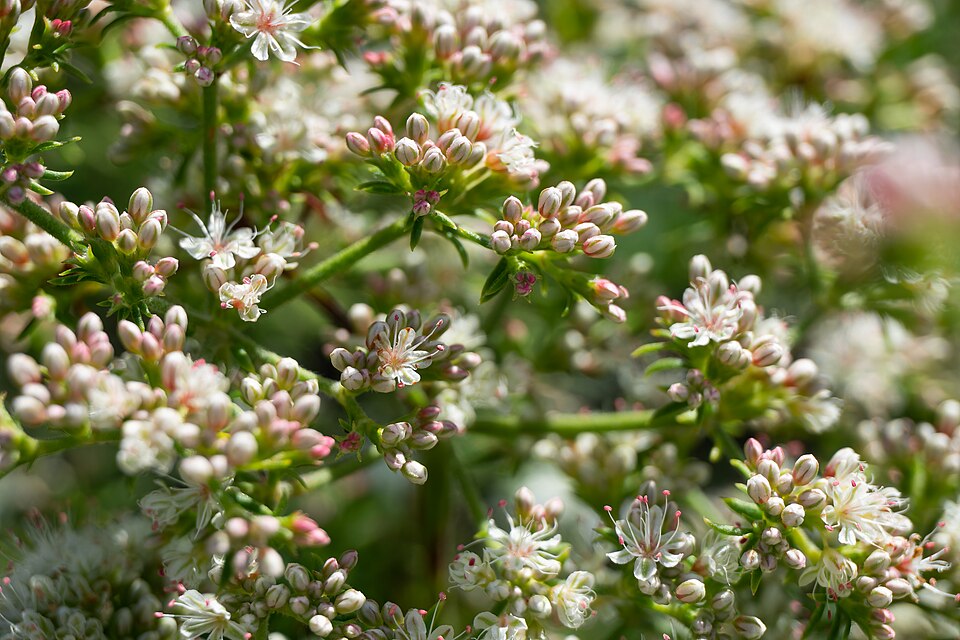
California buckwheat’s pale flower clusters.
California buckwheat’s pale flower clusters. Photo credit

California buckwheat adds pale flower clusters to a dry garden. Many forms make a shrub around four feet tall and wide, but ask about the size of the one on the nursery label.

Sun

Full sun to partial shade.

Soil & water

Very low to low water.

Full-grown size

About 4 ft tall × 4 ft wide; local forms vary.

Through the year

Evergreen shrub with flowers from midseason into the later bloom period.

Winter hardiness

Hardy to USDA zone 7.

Plant references

Before you go to the nursery

Browse nurseries in San Jose to find places to contact. Ask about the exact plants and varieties on your list before making a trip.

Bring a photo of the planting spot and its measurements. Note when it gets direct sun, how quickly the soil drains after watering, and whether you can water through a dry spell. Ask about the full-grown size of the exact variety on the label.

We have not confirmed local nursery listings for these plants yet. Use the botanical names above when you ask; common names can refer to more than one plant.

Sources & photo credits

Our selections draw on regional gardening references and species profiles. These are species guides; named varieties can have different sizes and needs. Photographs show the species, not nursery stock.

Local growing advice

Saratoga tree list · City of Saratoga · checked 2026-09-05

Pruning California native plants · California Native Plant Society · checked 2026-09-05

San Francisco vegetation palette · San Francisco Public Utilities Commission · checked 2026-09-05

Water-wise California native plants · University of California Agriculture and Natural Resources · checked 2026-09-05

A San Jose native garden · California Native Plant Society · checked 2026-09-05

Toyon

UC Davis water-wise garden exhibits · checked 2026-09-05

California native plants for partial shade · checked 2026-09-05

Water-wise California native plants · checked 2026-09-05

Heteromeles arbutifolia plant profile · checked 2026-09-05

Botanical identity: Heteromeles arbutifolia

Deergrass

UC Davis Arboretum All-Stars · checked 2026-09-05

California native plants for partial shade · checked 2026-09-05

Water-wise California native plants · checked 2026-09-05

Muhlenbergia rigens plant profile · checked 2026-09-05

Botanical identity: Muhlenbergia rigens

California fuchsia

UC Davis lawn conversion planting · checked 2026-09-05

Water-wise California native plants · checked 2026-09-05

Epilobium canum plant profile · checked 2026-09-05

Botanical identity: Epilobium canum

Coast live oak

Saratoga tree list · checked 2026-09-05

Quercus agrifolia plant profile · checked 2026-09-05

Botanical identity: Quercus agrifolia

California coffeeberry

San Francisco vegetation palette · checked 2026-09-05

Water-wise California native plants · checked 2026-09-05

Frangula californica plant profile · checked 2026-09-05

Botanical identity: Frangula californica

California buckwheat

California native plants for partial shade · checked 2026-09-05

Water-wise California native plants · checked 2026-09-05

Eriogonum fasciculatum plant profile · checked 2026-09-05

Botanical identity: Eriogonum fasciculatum

Winter hardiness and local weather

A USDA hardiness zone describes winter cold. It does not measure summer heat, drainage or water needs. Check your own ZIP and the label on the variety you buy.

City reference: ZIP 95112, zone 9b. A ZIP whose postal primary-city label matches this city, selected from the retained geography snapshot. It is a city reference, not your address; postal labels do not define municipal boundaries.

Frost is rare here; most years see little or no hard freeze. Station: SAN JOSE, CA US (1.51 km from the reference ZIP). These are historical averages, not a forecast.

USDA hardiness maps · NOAA climate normals
Photography

Heteromeles arbutifolia Briones Park.jpg by Awinch1001 · CC0. Replaced prior unsuitable image; resized Commons thumbnail to max 960px width; no crop or color change.

Muhlenbergia rigens form.jpg by Stan Shebs · CC BY-SA 3.0. Replaced prior unsuitable image; resized Commons thumbnail to max 960px width; no crop or color change.

Epilobium canum 5.jpg by Stan Shebs · CC BY-SA 3.0. Wikimedia Commons thumbnail, resized from the source photograph. No additional crop or color changes.

Quercus agrifolia-11.jpg by Eugene Zelenko · CC BY-SA 4.0. Wikimedia Commons thumbnail, resized from the source photograph. No additional crop or color changes.

CoffeeBerryFruit.jpg by Brofri · CC BY-SA 3.0. Wikimedia Commons thumbnail, resized from the source photograph. No additional crop or color changes.

Eriogonum fasciculatum - California Buckwheat.jpg by Jasper Shide · CC0. Replaced prior weak image; resized Commons thumbnail to max 960px width; no crop or color change.